66% of logistics pros say talent quality — not cost — is the #1 factor in choosing a nearshore partner. Rapido's integration model explains why that's the right question to be asking.
Plus, a carrier pleading guilty to mob money laundering while still FMCSA-active, Iran's first post-ceasefire attack and what it means for diesel surcharges, FedEx Freight's first earnings as a standalone company, and more in today's newsletter.
Freight brokers are measuring their inboxes wrong. Most inbound email is monitoring, not work. And the longtail categories that look like noise are costing real margin. Here's how to audit what's actually in your inbox, and why it matters in 2026's margin-first market.
The Panama Canal, a cornerstone of global shipping, faces a severe drought, its worst in over 70 years. Its guardian, the Panama Canal Authority (ACP), reports October as the driest since 1950. Consequentially, to combat plummeting water levels in Gatun Lake, the Canal's primary reservoir, the ACP initiated drastic reductions in ship bookings:
Daily slots will drop from an already reduced 31 to 25, eventually settling at 18 by February 2024.
These limitations have caused significant delays, affecting shipping rates and vessel availability globally.
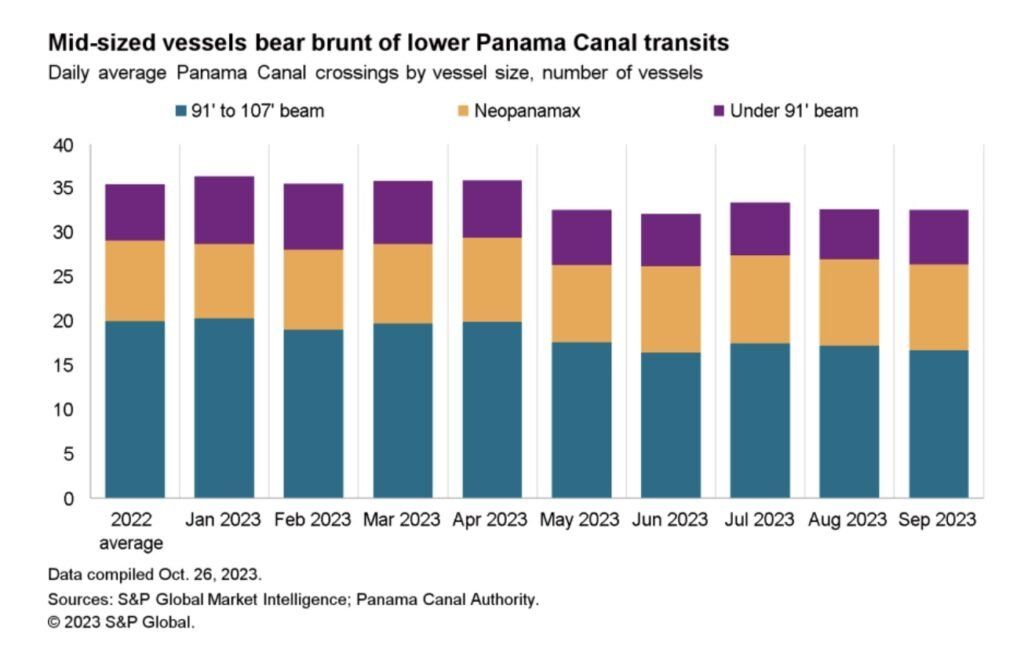
Mid-sized vessels feel the squeeze as the Panama Canal cuts daily transit slots.
Further insights from FreightWaves reveal a nuanced picture. The Neopanamax locks, which facilitate larger vessels like container ships and gas carriers, are notably affected. For instance, larger container ships travelling from Asia to the U.S. East Coast now experience draft challenges, which equate to cargo losses of 2,100 TEUs. With these constraints, liners are forced to offload cargo on one side of the Canal, transport it via rail, and reload on the opposite side. Plus, LNG carriers and VLGCs, too sizable for the Panamax locks, will likely be rerouted through longer routes, like the Suez Canal or the Cape of Good Hope.
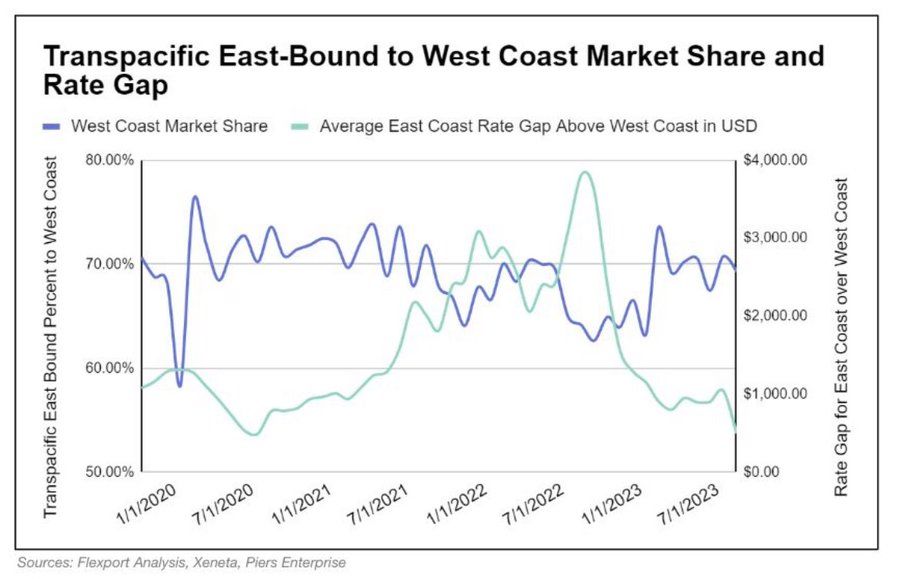
Chart illustrating the fluctuation of the West Coast market share alongside the average East Coast rate gap above the West Coast from November 2020 to July 2023.
Experts Timothy Dooner and Craig Fuller highlight the Canal's issues as a potential catalyst for a shift in port market share. As the Canal faces bottlenecks, the West Coast ports may see a resurgence, clawing back market share lost to the East Coast since the pandemic.
For logistics professionals, the Canal's constraints underscore the need for flexible shipping strategies and route diversification.
- Feb 2023: 36 ships per day - Aug 2023: 32 ships per day - Nov 2023: 25 ships per day - Jan 2024: 25 ships per day (est.) - Feb 2024: 18 ships per day (est.)
I’m Adriana, a writer and editor at FreightCaviar. I’ve covered everything from freight tech to industry lawsuits and market shifts, helping scale us to almost 14K subscribers. My goal: to make logistics stories digestible, clear, and fun to read.
Plus, the offshore dispatchers your safety score can't catch, why Hormuz stays closed even after the war ends, what Triumph Financial's invoice volumes say about where freight is headed, and more.
Plus, Super Ego fires back at 60 Minutes, China tells Maersk and MSC to exit Panama ports, New York loses $73.5 million over non-domiciled CDLs — and more in today's newsletter.
Keep up with the freight broker world in 5 minutes.
Join over 14K+ subscribers to get the latest freight news and entertainment directly in your inbox for free. Subscribe & be sure to check your inbox to confirm (and your spam folder just in case).