66% of logistics pros say talent quality — not cost — is the #1 factor in choosing a nearshore partner. Rapido's integration model explains why that's the right question to be asking.
Plus, a carrier pleading guilty to mob money laundering while still FMCSA-active, Iran's first post-ceasefire attack and what it means for diesel surcharges, FedEx Freight's first earnings as a standalone company, and more in today's newsletter.
Freight brokers are measuring their inboxes wrong. Most inbound email is monitoring, not work. And the longtail categories that look like noise are costing real margin. Here's how to audit what's actually in your inbox, and why it matters in 2026's margin-first market.
February threw a curveball in U.S. container import volumes, dipping 6% from January but still marking a 23.3% year-over-year increase with 2.14 million TEUs. This seemingly robust growth, however, comes with a grain of salt due to timing shifts in the Chinese Lunar New Year, skewing comparisons. When adjusting for the holiday, the real growth stands at a solid 13%, reflecting a post-pandemic resurgence.
Lunar New Year's Effect: The IOTI.USA index saw its steepest drop in over five years, plunging more than 40% post-holiday.
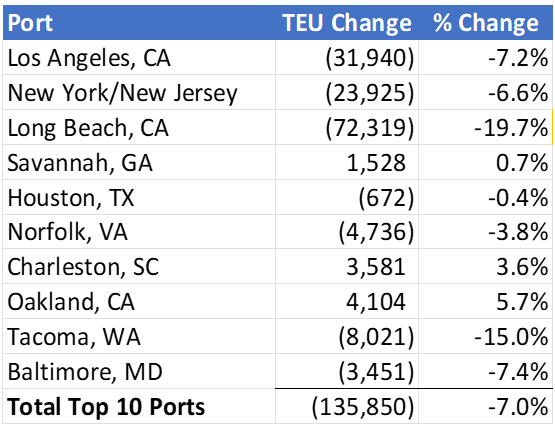
West vs. East: A dip in imports from China hurt West Coast ports, while East and Gulf Coast ports saw their share of U.S. imports rise to 44%.
Image Source: Source: Descartes Datamyne™
Despite these fluctuations, February saw shifts in the global supply chain landscape:
Reduced Port Congestion: Improved transit times, especially on the East Coast, hint at more efficient cargo handling.
Looking Ahead: The steep Lunar New Year dip suggests potential volatility ahead, yet Mexico's rising role as a manufacturing hub offers a glimmer of stability.
With maritime imports showing growth compared to pre-pandemic levels and Mexico's ascent as a trade powerhouse, the U.S. freight market stands at a crossroads. As it navigates through looming global uncertainties, the resilience of consumer demand and manufacturing outputs will be key to sustaining import growth. Yet, with global risks ever-present, a cautious outlook remains key.
I’m Adriana, a writer and editor at FreightCaviar. I’ve covered everything from freight tech to industry lawsuits and market shifts, helping scale us to almost 14K subscribers. My goal: to make logistics stories digestible, clear, and fun to read.
Keep up with the freight broker world in 5 minutes.
Join over 14K+ subscribers to get the latest freight news and entertainment directly in your inbox for free. Subscribe & be sure to check your inbox to confirm (and your spam folder just in case).