66% of logistics pros say talent quality — not cost — is the #1 factor in choosing a nearshore partner. Rapido's integration model explains why that's the right question to be asking.
Plus, a carrier pleading guilty to mob money laundering while still FMCSA-active, Iran's first post-ceasefire attack and what it means for diesel surcharges, FedEx Freight's first earnings as a standalone company, and more in today's newsletter.
Freight brokers are measuring their inboxes wrong. Most inbound email is monitoring, not work. And the longtail categories that look like noise are costing real margin. Here's how to audit what's actually in your inbox, and why it matters in 2026's margin-first market.
Happy Thursday. Here is what is trending on X, LinkedIn, Reddit, and YouTube.
🧠
Quick favor (1 min): What do you actually like in our newsletters? Take the survey. (We’ll send one reader a hoodie and our next magazine.)
Today's Newsletter is Brought to You by CtrlChain.
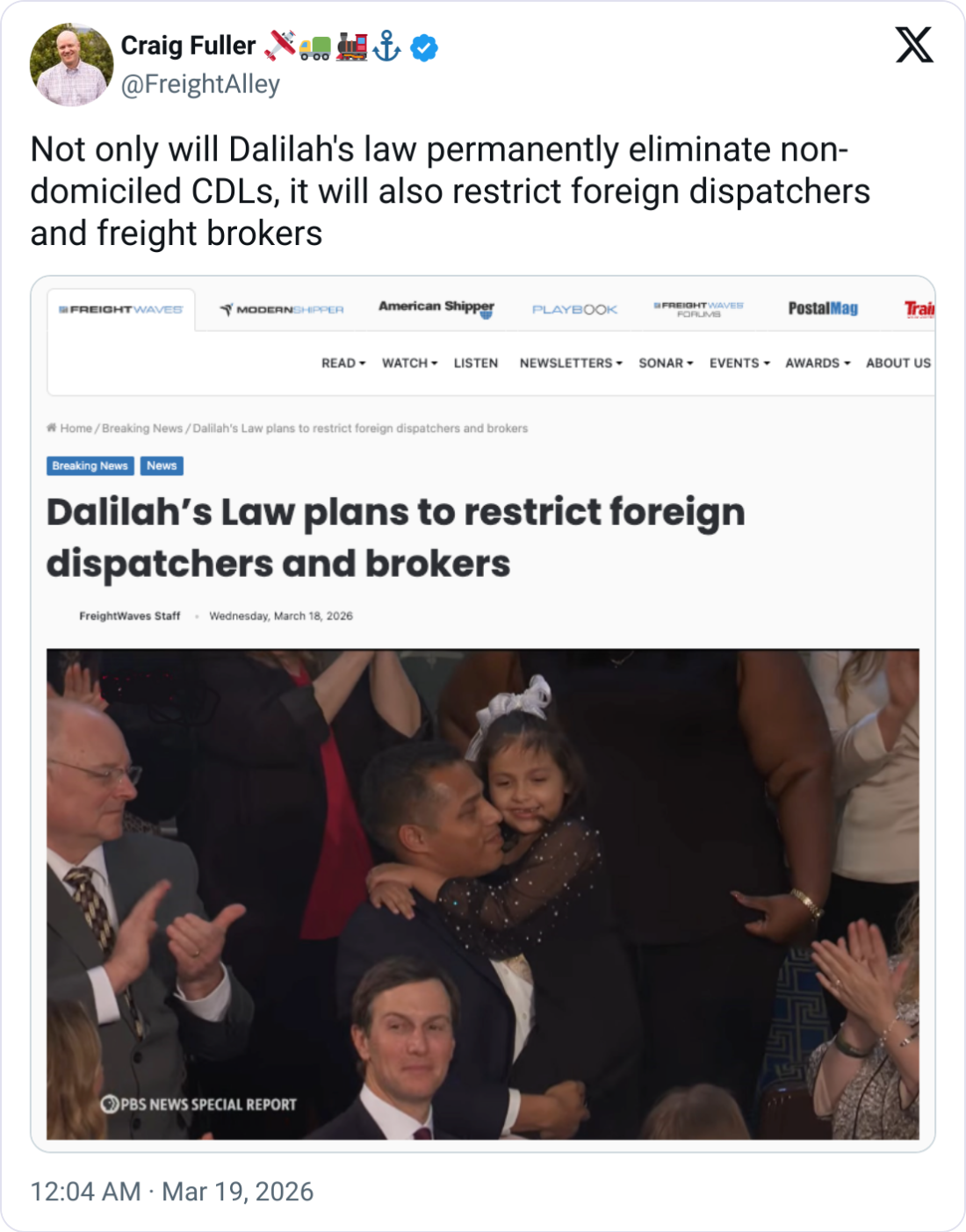
Trending on X: Dalilah’s Law Sparks Industry Debate
A tweet from Craig Fuller is gaining traction after highlighting that Dalilah Law would not only eliminate non-domiciled CDLs but also potentially restrict foreign dispatchers and brokers.
Supporters say it would level the playing field, arguing U.S. operators can’t compete with lower-cost overseas labor.
Critics are calling it unrealistic, pointing to enforcement challenges and political roadblocks.
Others see bigger implications: this could reshape outsourcing, after-hours operations, and how brokerages scale teams globally.
The reactions are split. Some call it long overdue, others say it’s never going to get passed.
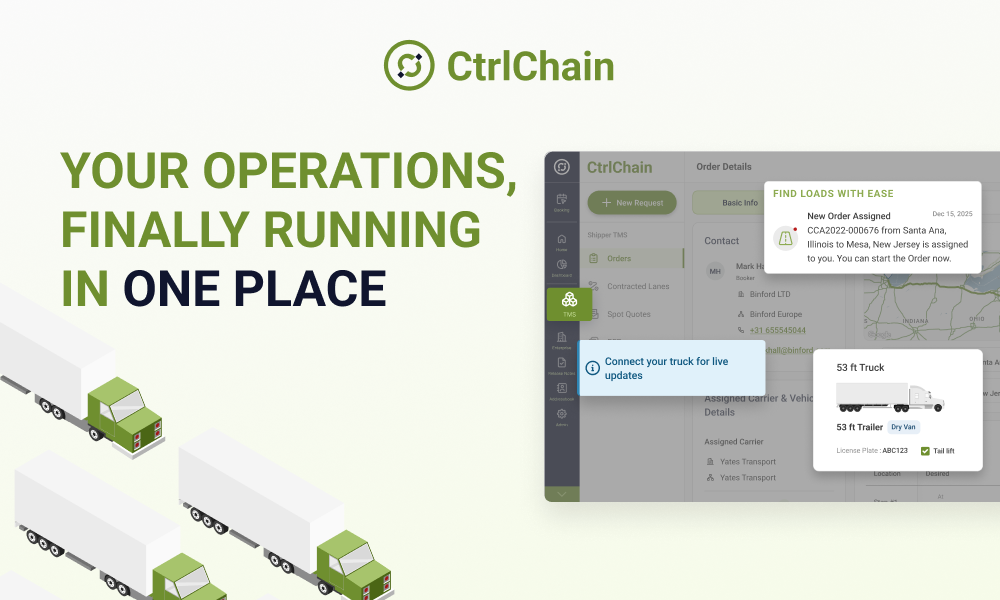
Your Road Operations, Finally Running in One Place
Most logistics teams juggle planning, carrier emails, spreadsheets, and status calls. A unified TMS solves most of these issues by pulling everything into one clean workflow.
Orders flow in automatically. Contracted lanes assign the right carrier without human input. Spot quotes run through a quick, structured quote flow. Every milestone updates in real time, every document lands in the right place, and every stakeholder sees the same truth.
It is the control layer that road logistics has always needed: less noise, fewer steps, and full transparency from booking to delivery.
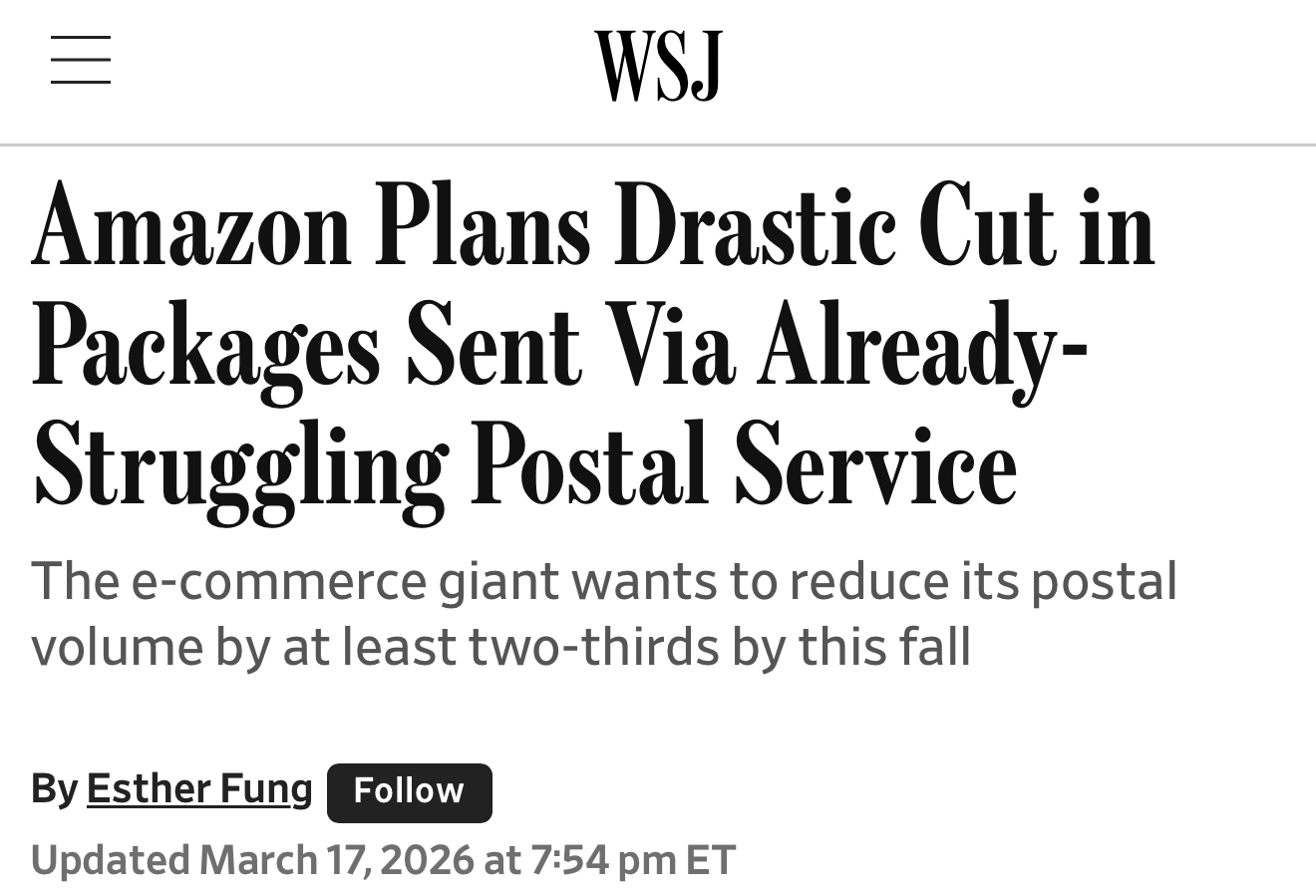
This one is making rounds on LinkedIn after reports that Amazon plans to cut USPS volume by up to two-thirds.
USPS handled over 1B Amazon packages last year (~15% of total volume) and even more in rural areas.
LinkedIn operators are framing this as a classic Build vs. Partner vs. Buy moment. Amazon partnered first, now it’s building control.
The bigger concern: what happens to USPS if its largest customer pulls back, especially when it's already losing billions.
The comments are split.
Some see this as inevitable. Amazon owning more of its network. Others are calling out the risk to rural delivery and national infrastructure if USPS volume drops too fast.
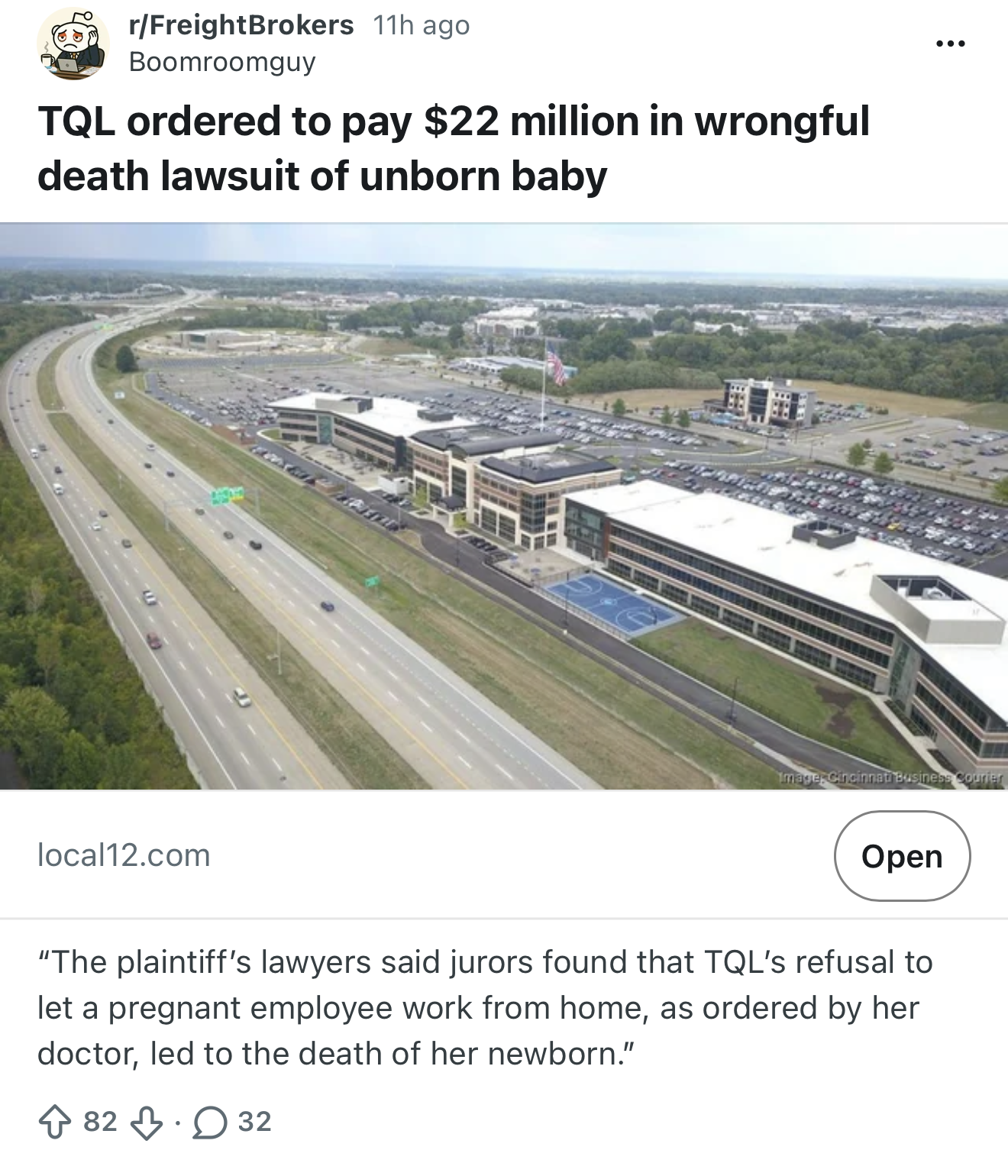
This story blew up on r/FreightBrokers after a jury ordered TQL to pay $22 million in a wrongful death lawsuit tied to a pregnant employee who was denied remote work.
Two doctors sent written requests asking TQL to allow remote work. The company refused.
The thread quickly turned into a pile-on, with brokers and former employees calling out company culture and leadership.
Others noted that $22M is likely a small hit for a company of that size.
At least one person in the thread warned others that TQL traces employee Reddit accounts.
Trending on YouTube: The Freight Industry's Loudest Voice on CDL Fraud
Danielle Chaffin, Senior Solutions Engineer at Revenova and a trucking fraud analyst, was interviewed by Tomi Lahren this week after her posts on X about non-domiciled CDL fraud have been going viral.
Chaffin claims as many as 1 in 4 truck drivers are non-citizens and says weak oversight has allowed unsafe drivers and questionable carriers onto the road.
She also points to CDL mills, chameleon carriers, and cargo fraud as part of a much bigger industry problem.
Her core claim: the "truck driver shortage" narrative pushed since 1987 was manufactured to justify cheaper labor, not fill a real gap.
The episode is clearly built to provoke, but it’s tapping into a real debate already bubbling inside trucking.
Plus, a carrier pleading guilty to mob money laundering while still FMCSA-active, Iran's first post-ceasefire attack and what it means for diesel surcharges, FedEx Freight's first earnings as a standalone company, and more in today's newsletter.
Bad carriers are gaming the weigh station system. Plus, C.H. Robinson's own engineer goes scorched earth on Reddit, the Ghost Truck Act gets roasted, and more in today's newsletter.
Keep up with the freight broker world in 5 minutes.
Join over 14K+ subscribers to get the latest freight news and entertainment directly in your inbox for free. Subscribe & be sure to check your inbox to confirm (and your spam folder just in case).