66% of logistics pros say talent quality — not cost — is the #1 factor in choosing a nearshore partner. Rapido's integration model explains why that's the right question to be asking.
Plus, a carrier pleading guilty to mob money laundering while still FMCSA-active, Iran's first post-ceasefire attack and what it means for diesel surcharges, FedEx Freight's first earnings as a standalone company, and more in today's newsletter.
Freight brokers are measuring their inboxes wrong. Most inbound email is monitoring, not work. And the longtail categories that look like noise are costing real margin. Here's how to audit what's actually in your inbox, and why it matters in 2026's margin-first market.
In 2020, Nikola Corporation was the hottest name in electric trucking.
Founded by Trevor Milton, the company promised to revolutionize freight with its hydrogen and battery-powered semi-trucks.
Investors bought in. Big-name partnerships, including General Motors, followed. At one point, Nikola's market value soared past $30 billion—more than Ford at the time.
But hype has a shelf life. And Nikola’s ran out quickly.
Today's newsletter is sponsored by TrueNorth.Schedule your demo today!
Nikola’s Vision
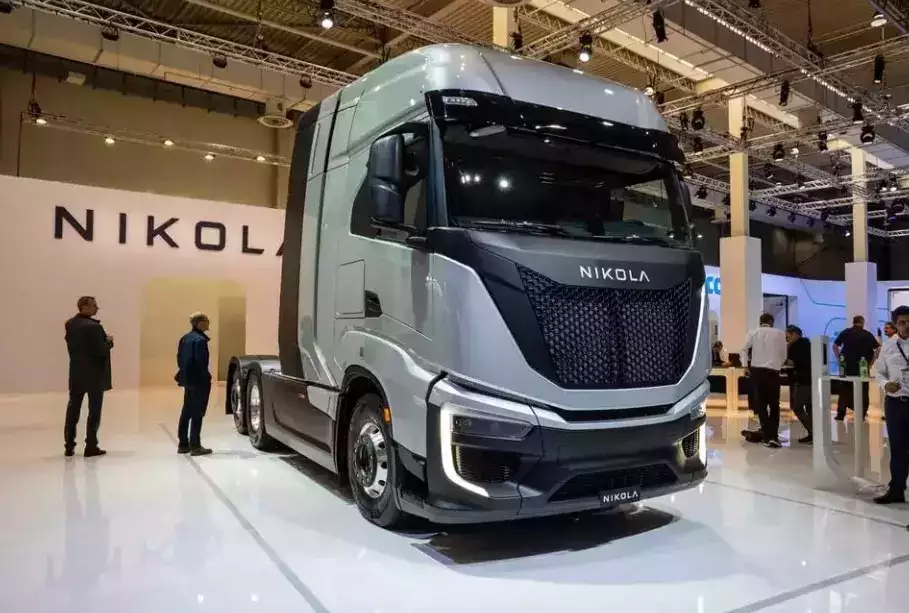
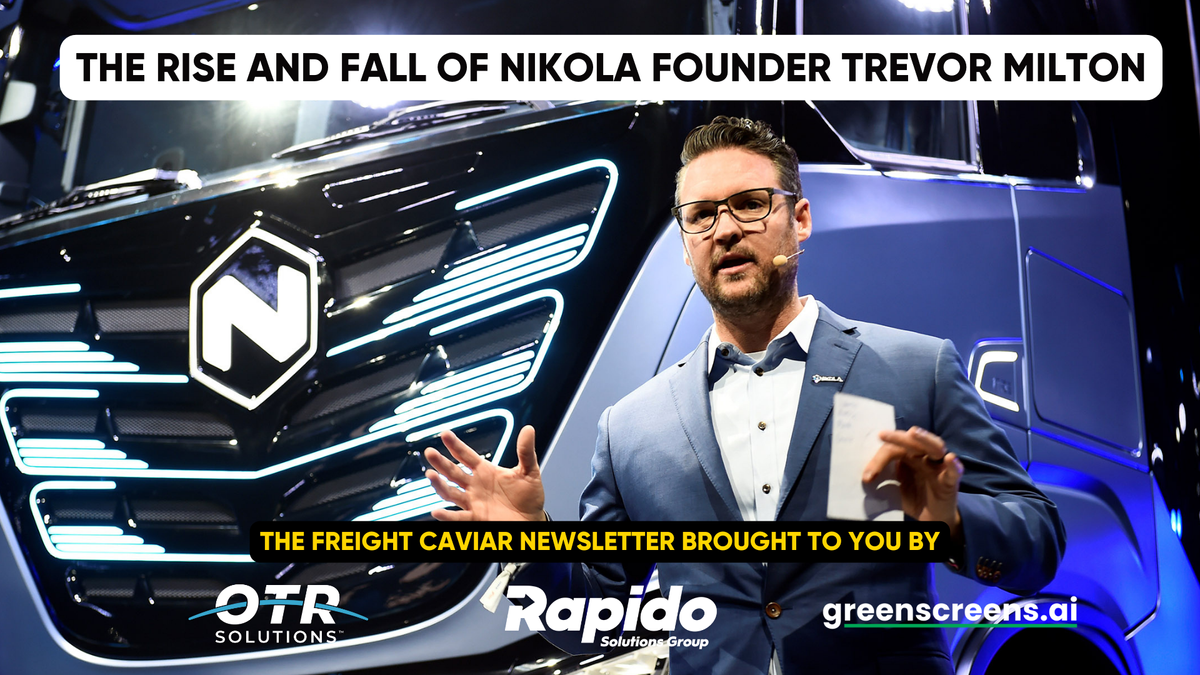
A Nikola truck was shown at an event. Image source: Energy News.
Nikola pitched itself as the future of zero-emission trucking.
It aimed to disrupt the industry with its Nikola One and Nikola Tre models, promising long-range, hydrogen-powered freight solutions.
The company even planned to build a nationwide hydrogen fueling infrastructure to support its ambitious vision. But while the promises were grand, the execution was anything but.
The Hindenburg Moment
“We have never seen this level of deception at a public company, especially of this size,” Hindenburg stated in its report, titled How to Parlay An Ocean of Lies Into a Partnership With the Largest Auto OEM in America.
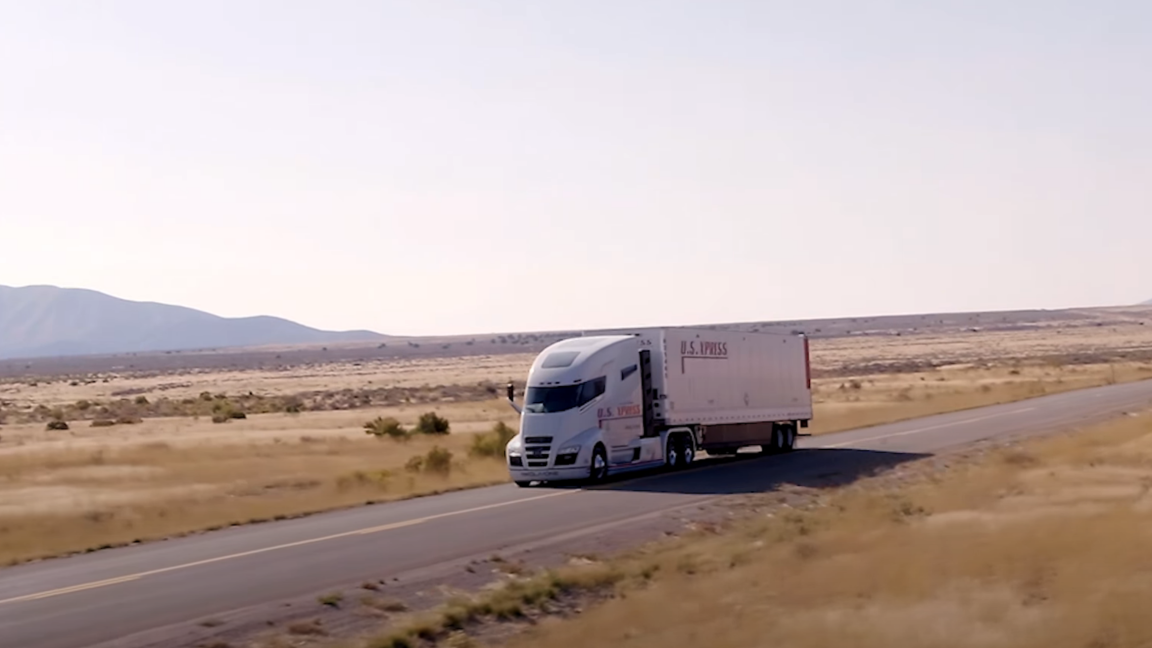
Hindenburg revealed how Nikola staged a promotional video called Nikola One in Motion, showing a truck supposedly cruising under its own power. In reality, it was towed to the top of a hill and simply rolled down.
This wasn’t the only lie. Nikola falsely claimed to have proprietary battery and hydrogen technology, all while outsourcing key components and concealing the truth from investors.
The fallout was swift. Milton stepped down. The SEC and DOJ launched investigations. By 2022, he was convicted of fraud and sentenced to prison. Nikola’s stock, once flying high, crashed back to reality.
Nikola also acquired battery-maker Romeo Power in 2022, hoping to secure its own battery supply, but the deal failed to solve its cash problems.
The company made efforts to establish hydrogen fueling stations, securing partnerships with energy firms to develop infrastructure. Yet, the high costs and logistical challenges of hydrogen production remained a massive hurdle. Nikola struggled to make the business model work.
Despite these efforts, the bad news kept coming—recalls, fires, and mounting financial losses.
In 2023, the company recalled over 200 battery-electric trucks due to fire risks.
By 2024, Nikola’s financial health had deteriorated. It struggled with supply chain disruptions, production delays, and a lack of investor confidence.
The Final Chapter?
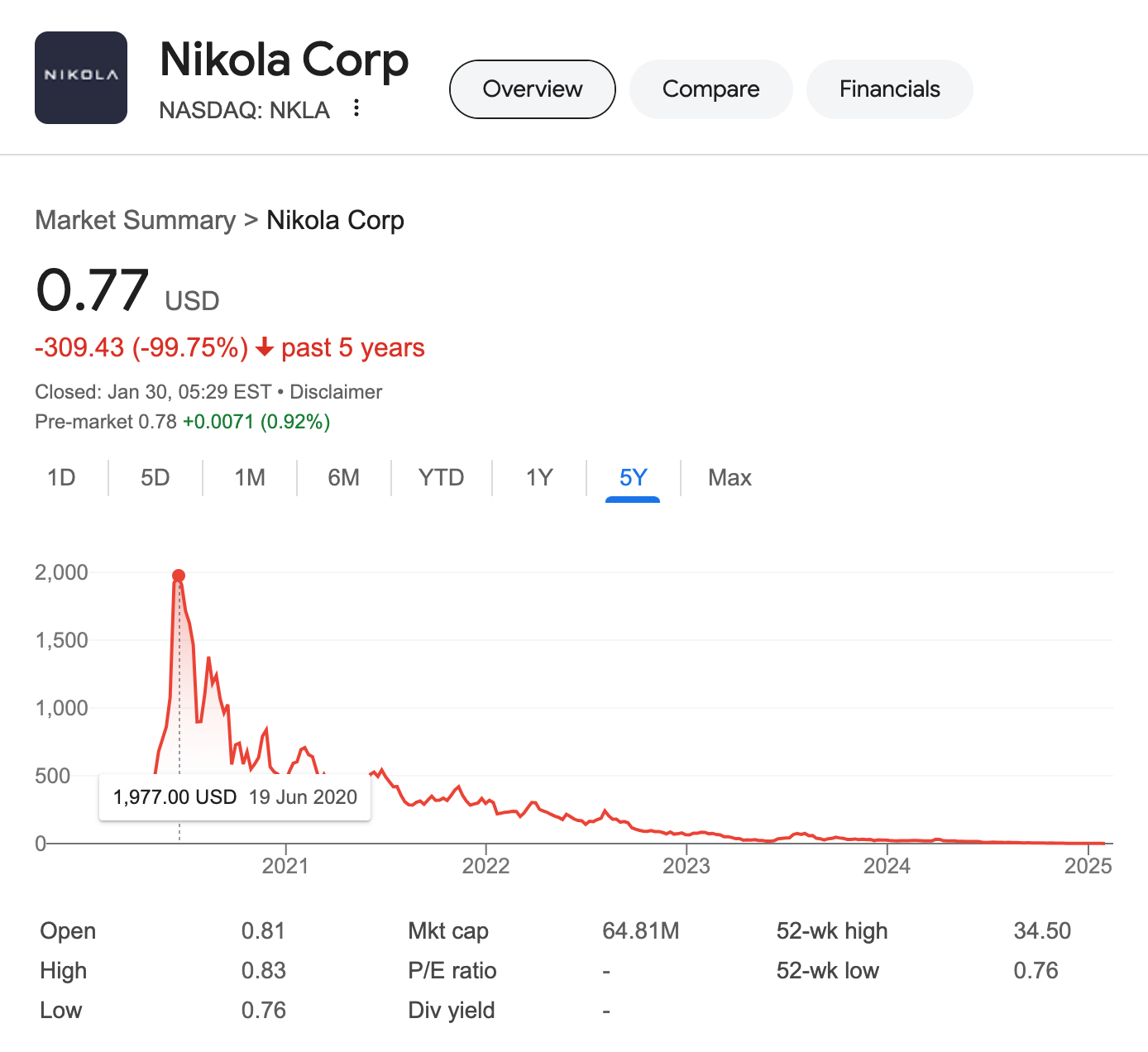
Nikola's share price has dropped 99.75% since it went public.
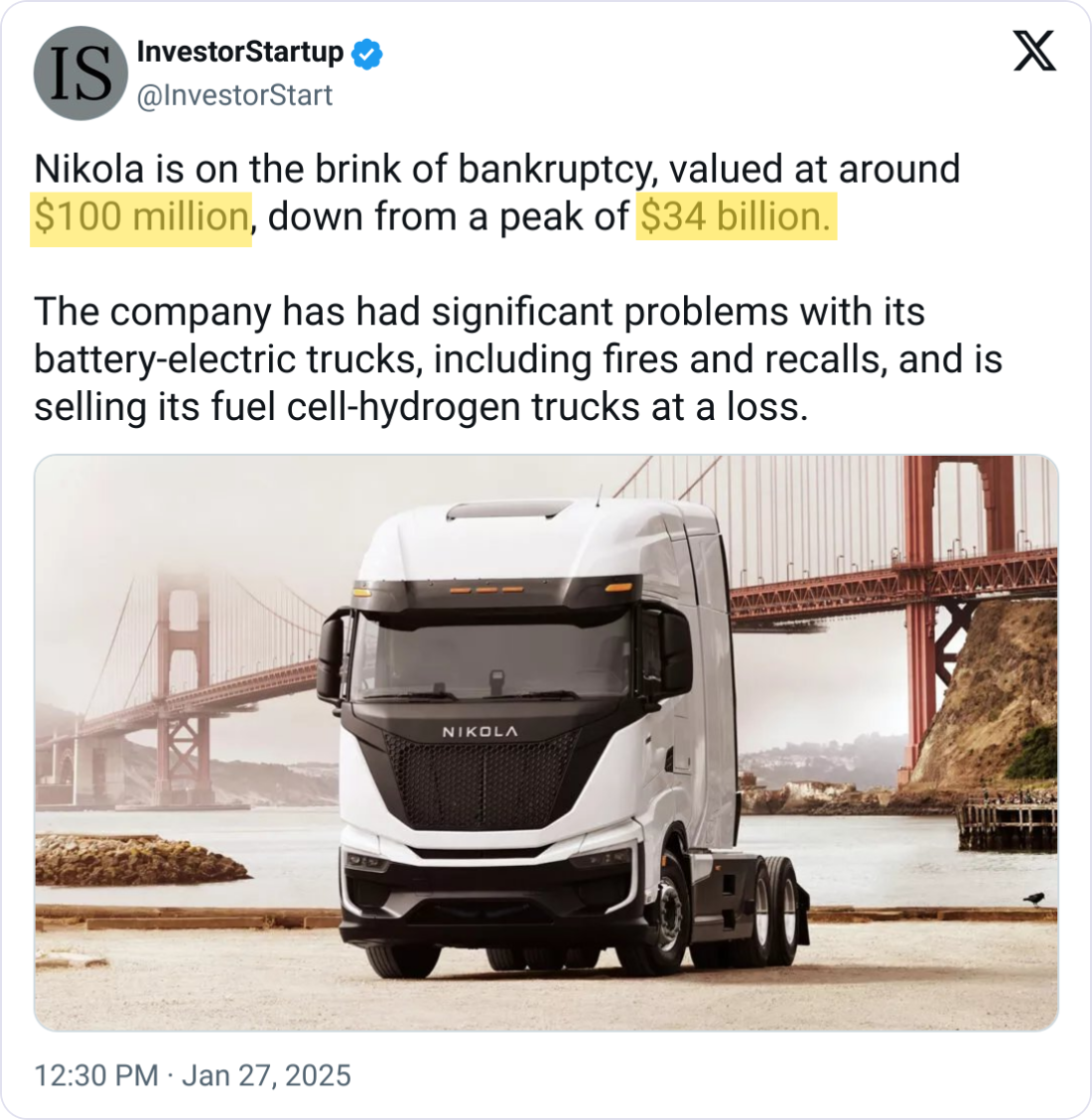
Fast forward to 2025, and Nikola is on the brink.
Stock prices have plummeted 95% in the last year. Reports indicate the company is exploring selling parts—or the entirety—of its business. With only enough cash to last through Q1, it’s a race against time.
A source close to the company told Bloomberg, “At this point, every option is on the table. They need a lifeline.”
Meanwhile, Trevor Milton has been released from prison and has returned to social media, defending himself and Nikola’s legacy. In a recent post, he wrote:
“It’s hard to believe at one point people doubted Nikola trucks were even real. Seeing Nikola trucks still on the road today is a testament to the truth. Makes you wonder how far we could’ve gone if there weren’t so many bumps along the way.”
Milton continues to insist that Nikola was unfairly targeted by short-sellers and the government. In another post, he claimed:
“The shortsellers and government were able to change the story and rewrite the truth because the company refused to stand up and tell the truth.”
Despite his public statements, the numbers tell a different story. Nikola’s cash reserves are dwindling, and without a major turnaround, its future remains uncertain.
The Lesson?
Hype is not a business model. At its peak, Nikola was a story investors wanted to believe. But the market eventually wakes up.
Tesla, Rivian, and other EV companies still have their challenges. But Nikola’s story serves as a stark reminder: In business, reality always wins.
TAB-LLC is a wholly owned subsidiary of Artur Express Inc. Our asset-backed model allows our agents to explore opportunities that would otherwise be unavailable.
At TAB, we provide agents with unmatched support, leading technology, staffing options, and unlimited potential to meet their financial goals and keep the wheels turning.
What we offer:
25-year-old asset-based logistics company with an A+ Credit Rating
Plus, a carrier pleading guilty to mob money laundering while still FMCSA-active, Iran's first post-ceasefire attack and what it means for diesel surcharges, FedEx Freight's first earnings as a standalone company, and more in today's newsletter.
Bad carriers are gaming the weigh station system. Plus, C.H. Robinson's own engineer goes scorched earth on Reddit, the Ghost Truck Act gets roasted, and more in today's newsletter.
Keep up with the freight broker world in 5 minutes.
Join over 14K+ subscribers to get the latest freight news and entertainment directly in your inbox for free. Subscribe & be sure to check your inbox to confirm (and your spam folder just in case).