66% of logistics pros say talent quality — not cost — is the #1 factor in choosing a nearshore partner. Rapido's integration model explains why that's the right question to be asking.
Plus, a carrier pleading guilty to mob money laundering while still FMCSA-active, Iran's first post-ceasefire attack and what it means for diesel surcharges, FedEx Freight's first earnings as a standalone company, and more in today's newsletter.
Freight brokers are measuring their inboxes wrong. Most inbound email is monitoring, not work. And the longtail categories that look like noise are costing real margin. Here's how to audit what's actually in your inbox, and why it matters in 2026's margin-first market.
A trade group is suing to strip California and New York of the power to issue commercial driver's licenses entirely. Plus: $3/mi is now breakeven, DOT wants to rate every carrier, routing guides are falling apart, and more.
Happy Hump Day. A trade group is suing to strip California and New York of the power to issue commercial driver's licenses entirely. We break it down in today's feature story.
Plus:
$3 Per Mile Is Now Breakeven
DOT Wants to Rate Every Carrier
Routing Guides Are Falling Apart
💡
Question of the Day: New York issued ___% of its sampled non-domiciled CDLs in violation of federal law.
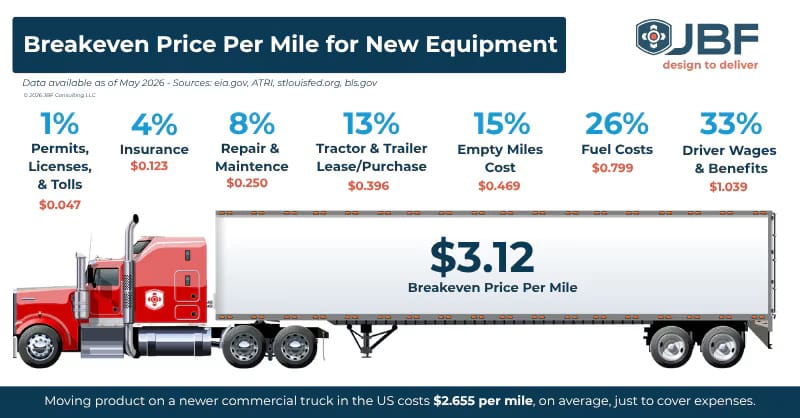
💸 Breakeven Just Crossed $3 a Mile. For the first time ever, the truckload breakeven price on new equipment hit $3.12 per milein Q2 2026 — up 36 cents, or 13%, since August 2025. Per JBF Consulting, diesel did most of it: March's spike added about 30 cents per mile, and fuel now accounts for 80 cents per mile. On a coast-to-coast haul, that's about $852 more than a year ago. Driver pay, insurance, and equipment costs are up, too. Rates are climbing, but carriers are still struggling to cover costs. And Chris Doersen, JBF's principal of client engagement, doesn't see relief soon: "Diesel will have to drop to around $4.00 per gallon within the next six months to drop breakeven below $3.00 per mile again."
🔍 A Fix For Unrated Carriers is Coming - Slowly. Since the Supreme Court opened brokers to liability last month, brokers have been demanding that the FMCSA publish a high-risk carrier list and scrambling to vet the 90%-plus of carriers without a safety rating. DOT has had a partial answer in the works since April: a contract with freight-data firm Bluewire, through its Volpe Center, to build a predictive model that could rate every carrier under DOT authority. The catch: Bluewire delivers it at the end of September, then it still faces Congress and rulemaking. Bluewire CEO Steve Bryan: "It's a long road, and that's assuming our customer accepts what we give them."
🚛 Routing Guides are Falling Apart. Truckload contract rates locked early in this year's bid season aren't holding. Tender rejections have surged, and some shippers are rebidding their entire book. "They're falling apart," J.B. Hunt's Spencer Frazier said of routing guides, "and that's what has happened at an accelerated pace from March through today." Schneider says contract renewals are at their highest since 2021, and J.B. Hunt expects a cumulative 20% rate hike over two years. The problem: too few carriers that shippers and brokers can safely use. More than half a million U.S. carriers run at least one truck, but Schneider's Jim Filter says only a fraction are safe bets: "There aren't 50,000 carriers in this country that you could vet and say that they're safe."
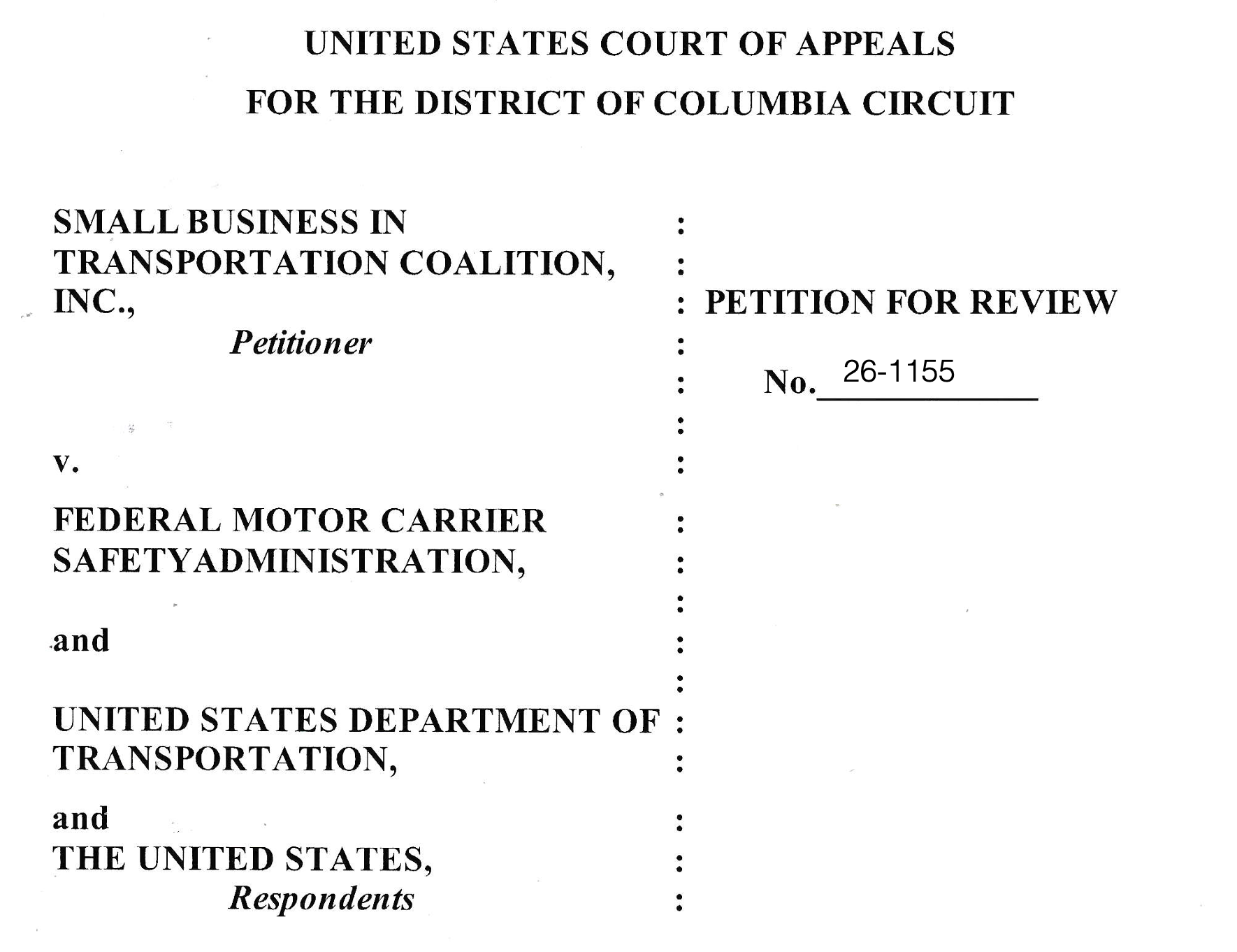
On June 10, the Small Business in Transportation Coalition (SBTC) petitioned the D.C. Circuit to force the FMCSA and DOT to strip California and New York of the authority to issue commercial licenses.
SBTC says it asked the agency to do exactly that back in May 2025, and FMCSA sat on the request for more than a year without responding.
The petition comes after a stretch that made the stakes hard to ignore. In late May, a New York-licensed bus driver who allegedly couldn't speak a word of English crashed in Virginia and killed five people, including a family of four. Weeks later, an Arkansas trooper ran an 80,000-pound truck, looked down at a California CDL that read "NO NAME GIVEN," and waved it back onto the interstate.
The whole case hangs on one word: shall. The law says that once FMCSA finds a state in "substantial noncompliance," the Secretary shall prohibit it from issuing licenses. SBTC argues that the finding automatically triggered Duffy's duty to act and that the agency separately ignored the group's 2025 decertification petition for over a year, which it calls a due-process violation.
FMCSA audited both states in 2025, and the numbers are why SBTC thinks it has a case:
California came in around 25% noncompliant on non-domiciled CDLs and has already lost millions in federal funds after missing a deadline to cancel 17,000 of them.
New York was worse, blowing past 55%, with 107 of 200 sampled licenses issued in flat violation of federal law. It's taken a $73.5 million hit while insisting it followed the rules.
Pennsylvania and Ohio are reportedly next on SBTC's list.
California is boxed in. A state court ordered the DMV to reopen applications for the canceled drivers, but the feds are blocking it from doing so, and threading that needle wrong could pull the whole program down.
The court has already been leaning toward the government's way.
On May 5, a three-judge D.C. Circuit panel voted 2-1 to refuse to block FMCSA's non-domiciled CDL rule, with Judges Gregory Katsas and Neomi Rao writing that petitioners "have not shown a strong likelihood of success."
The court fast-tracked the case: petitioners' briefs were due June 15, the government's response July 15, final briefs August 5.
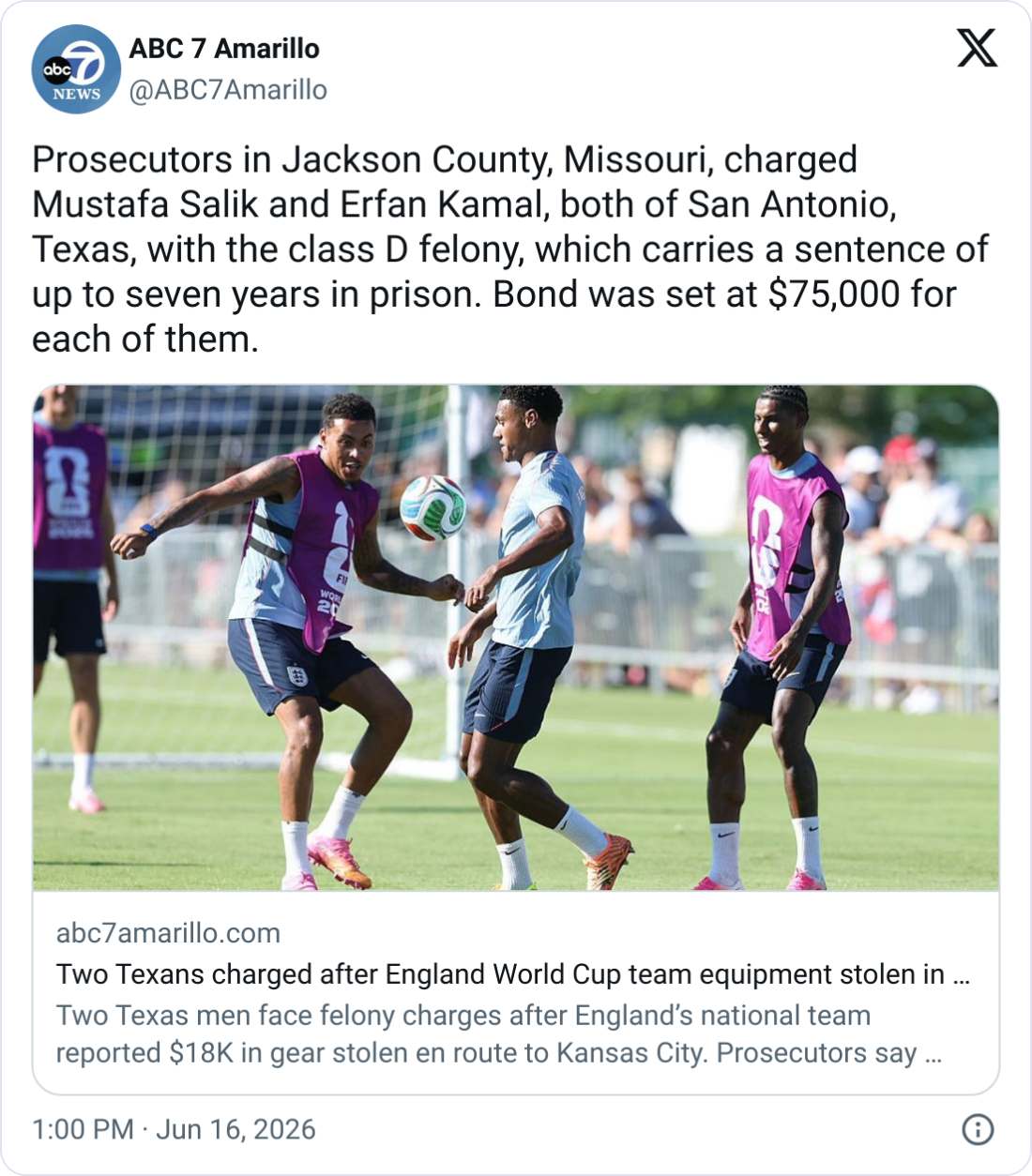
⚽ England's World Cup Kit Got Picked Off. Two drivers hauling Team England's gear liftedabout $18,000 of cleats, jerseys, and balls en route. They're now facing felony charges, with a maximum sentence of up to 7 years in prison.
⛽ Diesel Keeps Sliding. The national average fell 15.1 cents for the week of June 15, a sixth straight weekly drop, per the EIA, as a preliminary U.S.–Iran deal pulls oil prices down.
⚠️ Stop Driving These Macks and Volvos. Mack and Volvo issueda "Do Not Drive" recall for 799 newer trucks due to loose lug nuts that can cause a wheel to detach. Owners are told not to drive until it's fixed.
📈 Uber Freight Says the High Rates are Sticking. Spot volumes jumped 44% across its network last quarter, and they expectspot rates to run 20–25% above last year through the rest of 2026.
🤖 Freight Thieves Got an AI Upgrade. Crews are using AI to forge carrier paperwork, insurance certs, and driver's licenses convincing enough to reroute loads at scale, execs at TQL and McLeod toldTransport Topics.
📉 Truck Buyers Still Aren't Committing. U.S. Class 8 sales fell8% year over year in May to 17,280 units and are down 16% year to date, even as monthly sales rose for a fifth straight month.
Plus, a carrier pleading guilty to mob money laundering while still FMCSA-active, Iran's first post-ceasefire attack and what it means for diesel surcharges, FedEx Freight's first earnings as a standalone company, and more in today's newsletter.
Bad carriers are gaming the weigh station system. Plus, C.H. Robinson's own engineer goes scorched earth on Reddit, the Ghost Truck Act gets roasted, and more in today's newsletter.
Keep up with the freight broker world in 5 minutes.
Join over 14K+ subscribers to get the latest freight news and entertainment directly in your inbox for free. Subscribe & be sure to check your inbox to confirm (and your spam folder just in case).