66% of logistics pros say talent quality — not cost — is the #1 factor in choosing a nearshore partner. Rapido's integration model explains why that's the right question to be asking.
Plus, a carrier pleading guilty to mob money laundering while still FMCSA-active, Iran's first post-ceasefire attack and what it means for diesel surcharges, FedEx Freight's first earnings as a standalone company, and more in today's newsletter.
Freight brokers are measuring their inboxes wrong. Most inbound email is monitoring, not work. And the longtail categories that look like noise are costing real margin. Here's how to audit what's actually in your inbox, and why it matters in 2026's margin-first market.
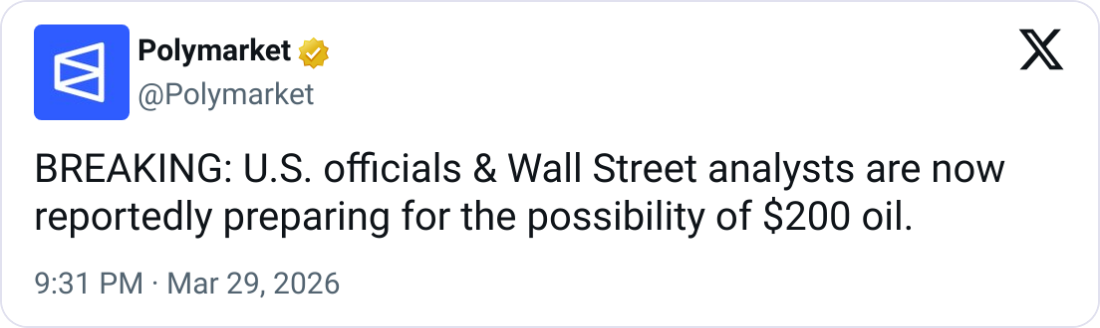
What $200 oil means for freight. Plus: C.H. Robinson raised its rate forecast, states are writing their own CDL laws, a KitKat heist goes viral, and more.
Happy Monday. The Strait of Hormuz has been effectively closed for four weeks, diesel is already at $5.37 a gallon, and Macquarie warns oil could hit $200 a barrel if the war drags into June.
Plus:
C.H. Robinson Raised Its Rate Forecast
States Are Writing CDL Laws
KitKat Heist Goes Viral
💡
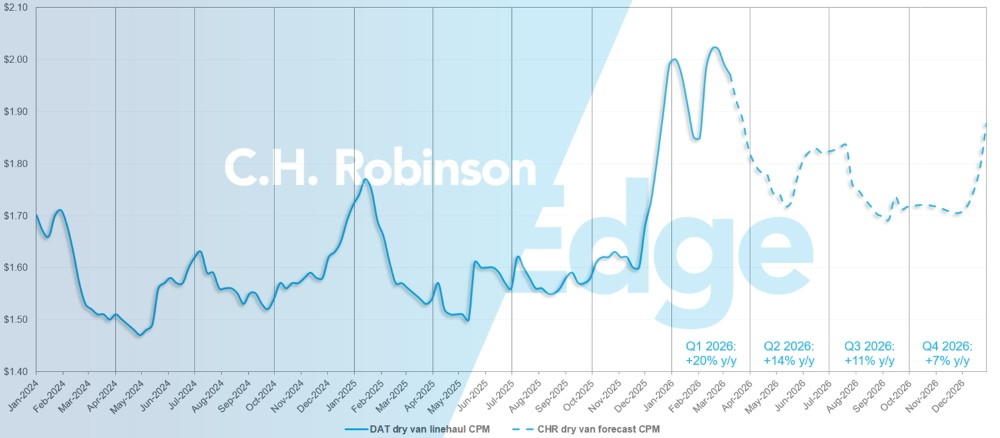
Question of the Day: C.H. Robinson updated its 2026 outlook this month: dry van truckload rates are now expected to run __% higher than last year.
📈 C.H. Robinson Just Raised Its Rate Forecast. The world's largest freight broker updated its 2026 outlook this month: dry van truckload rates are now expected to run 12% higher than last year, up from their prior estimate of 10%. They also raised the floor on how low spot rates will get, with the new bottom at $1.72 per mile, up from $1.65. Three years of carriers going out of business has thinned the truck supply to the point where even modest demand is moving prices. Flatbed load-to-truck ratios hit 60-to-1 in late February, the highest since mid-2022, meaning 60 loads competing for every available truck. Carriers are parking equipment they can't staff and refusing loads.
🚛 States Are Writing Their Own CDL Laws. Indiana, Alabama, and South Dakota have already signedlegislation this month tightening non-domiciled CDL rules, and Tennessee, Georgia, and South Carolina are moving fast behind them. Indiana's law is the sharpest: all non-domiciled CDLs issued before March 1 expire April 1, fake credentials are a felony, and employers who knowingly hire ineligible drivers face $50,000 fines. Alabama codified federal rules into state law with doubled penalties for repeat violations. Tennessee is pushing further — its bill would make it a Class A misdemeanor to drive a truck without documentation and give any injured Tennessean a private right of action against the company that hired the driver and the state that issued the driver's license.
🍫 KitKat Heist Goes Viral. A cargo theft story took over X this weekend for obvious reasons: thieves stole 12 tons of KitKat bars in transit between a Nestlé factory in central Italy and their destination in Poland, making off with more than 400,000 chocolate bars.The bars were limited-edition Formula 1-shaped KitKats, exactly the kind of high-value, hard-to-trace consumer goods that organized theft rings target because they move fast on secondary markets. Cargo theft across Europe has been rising steadily, with criminal networks increasingly hitting cross-border truck routes between manufacturing hubs in southern Europe and distribution centers in Poland, Germany, and the Netherlands. The same playbook US brokers know well is spreading across EU logistics corridors. Nestlé told reporters, "Cargo theft is an escalating issue for businesses of all sizes."
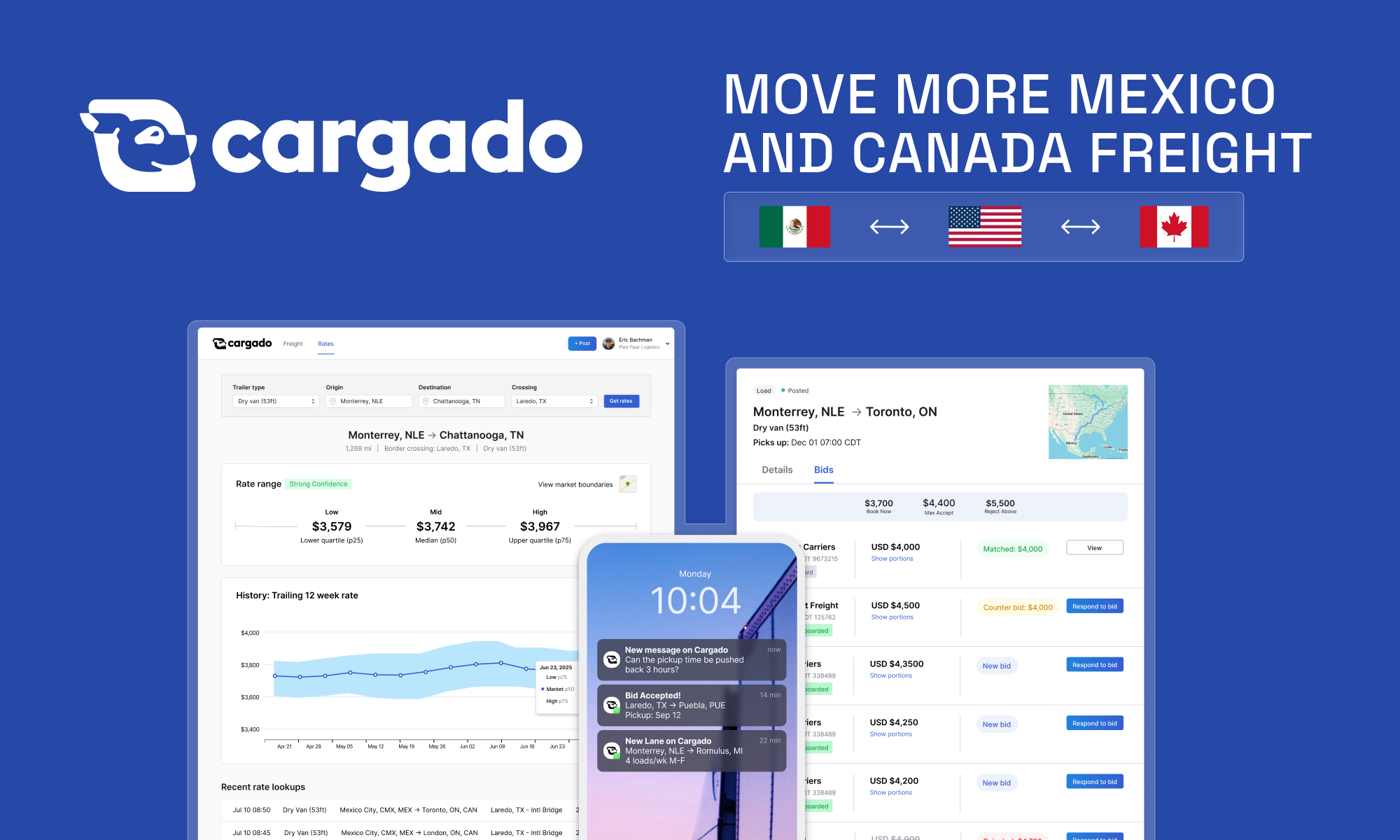
Cargadogives you everything you need to grow your Mexico and Canada business easily. Look up market rates instantly with Cargado Market Rates, finish RFPs in minutes using the Cargado Add-In for Excel, and book trusted Mexico and Canada carriers fast all in one marketplace app.
Diesel is already at $5.37 a gallon. Three weeks ago, it was $4.86. Macquarie says there's a 40% chance oil hits $200 a barrel if the Strait of Hormuz stays shut through June.
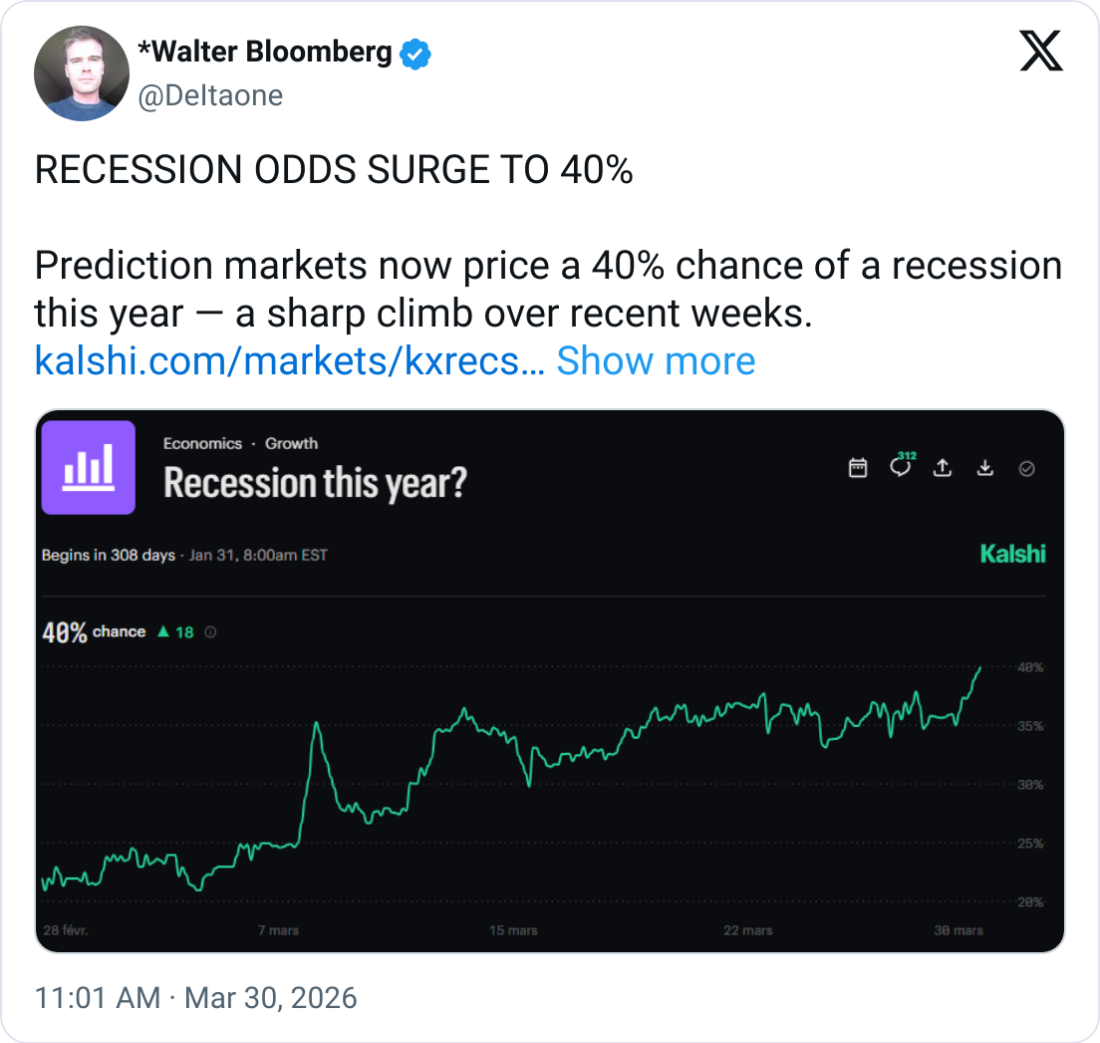
The last time crude hit $200/barrel was right before the 2008 financial recession.
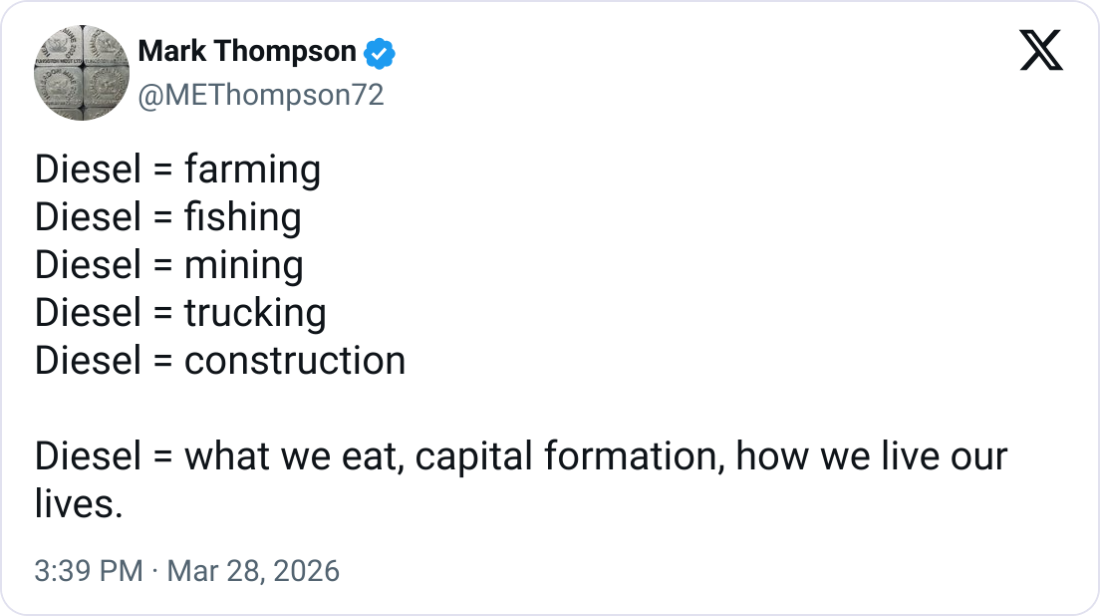
Oil isn’t just what powers trucks. It’s in fertilizers, packaging, plastics, and almost everything that moves through the supply chain.
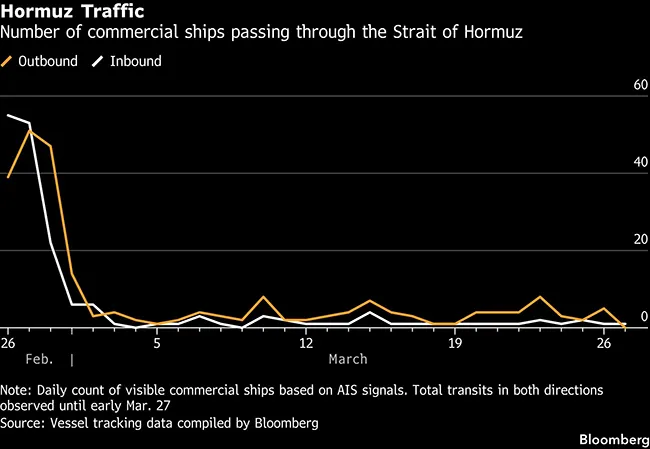
The Strait of Hormuz normally moves ~20 million barrels of oil per day. Right now, traffic is effectively frozen, with only a fraction of vessels getting through, according to shipping data reported by Transport Topics.
Source: Bloomberg via Transport Topics
That’s why oil jumped from ~$70 to over $100 in a matter of weeks.
And if it stays shut, the only way to rebalance the market is demand destruction: meaning higher prices until people and businesses are forced to consume less.
Many governments in Southeast Asia (those most dependent on oil from the Strait of Hormuz) have already told their citizens to work from home to reduce oil consumption.
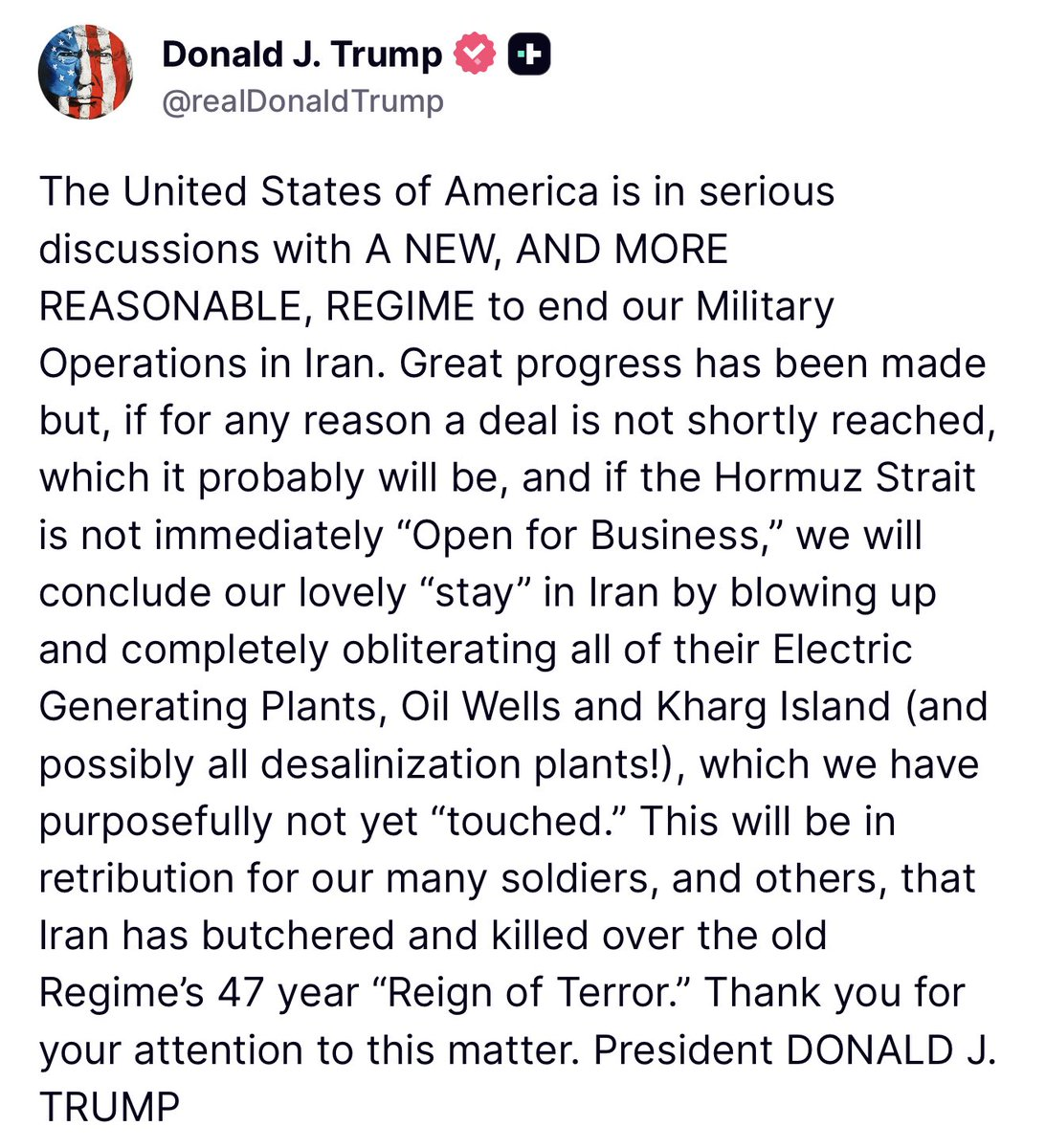
The situation is still fluid. Moments ago, President Trump said the U.S. is in active discussions to reopen the Strait, but warned of escalation if it doesn’t.
Trump's post on Truth Social earlier this morning.
Rising Fuel Costs
Fuel already accounts for roughly 30% of the cost to run a truck, up from 21% in 2024. ATRI data shows carriers were already operating at $2.26 per mile last year before this month's diesel spike. There isn't much cushion left.
But higher fuel doesn't automatically mean higher rates.
“A cost increase does not automatically translate into a price increase,” FreightWaves noted.
Rates are set by supply and demand, not cost.
In March 2022, diesel surged while truckload rates collapsed. Capacity flooded the market. Carriers ate the increase and went broke quietly.
Today is different. Capacity has been contracting for the past 3 years. Tender rejections are rising. Dry van just broke $3.00 per mile for the first time since 2022.
In a tight market, carriers pass costs through to customers. In a loose market, they absorb them.
At $200 oil, contract freight has some protection through fuel surcharges.
Spot freight doesn’t.
Owner-operators get squeezed first. Trucks get parked. Capacity tightens further. Brokers reprice faster than shippers expect. Transportation budgets built in January become fiction by May.
But this doesn’t stop at trucking.
Ocean carriers are already feeling it.
Hapag-Lloyd says the war is costing them $40–50 million per week in fuel, insurance, and rerouting costs.
And the macro impact is building fast.
Economists now expect U.S. inflation to climb above 3% this year as energy prices rise, with transportation costs feeding directly into consumer goods pricing, according to Bloomberg.
“The tail effects of the closure of the Strait of Hormuz are still long,” KPMG’s chief economist said.
When capacity tightens, every minute counts. The Convoy Platform connects brokers with continuously vetted, reliable carriers to quickly secure the trucks you need—eliminating dead-end calls and giving you the edge in a competitive market.
You set the strategy that's right for your business—from pricing to carrier preferences—while our automated marketplace covers vetting, tracking, document management, payouts and more, freeing up your team to focus on delivering top-tier service and reliability that your customers demand.
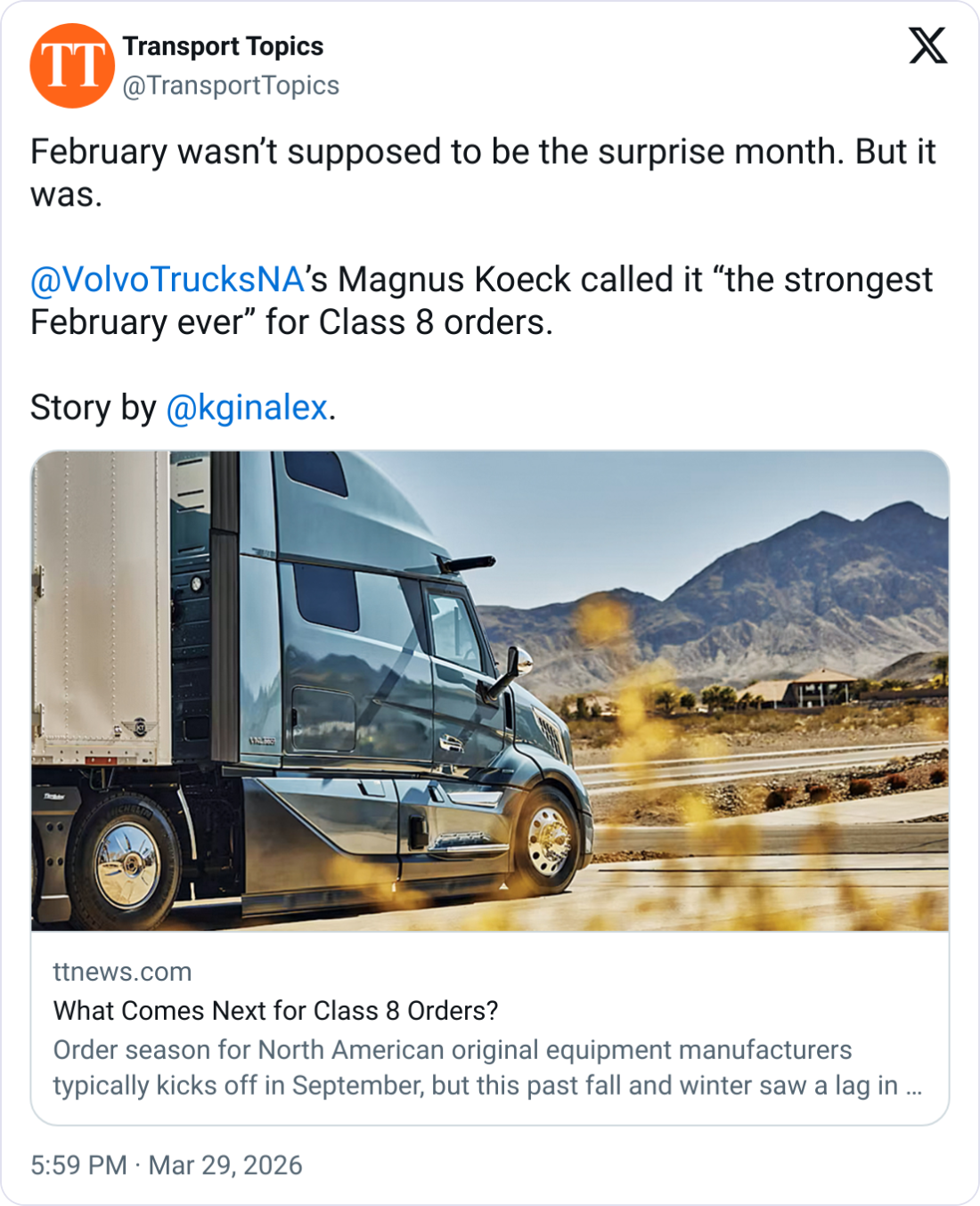
🚛 Strongest February for Class 8 Orders Ever. North American Class 8 truck orders jumped 156% year over year to 46,200 units in February, with fleets placing orders for build slots throughout 2026, though Volvo's strategy chief warned the surge could be FOMO-driven and lead to cancellations.
🌎 USMCA Review Officially Launched. The US and Mexico formally kicked off the trade agreement review on March 18, with a July 1 deadline to decide whether to extend it for 16 years or trigger a decade of annual renegotiations covering $1.6 trillion in annual cross-border freight.
📉 The Freight Recession Debate Is Back. The Cass Freight Index hit shipment levels not seen since 2009, sparking recession fears on X, but Craig Fuller pushed back: LTL consolidation is distorting the read, and dry van just broke $3.00 per mile for the first time since 2022.
⚖️ Dalilah's Law Heads to Senate. A federal bill would make non-domiciled CDL restrictions permanent law, require all 50 states to audit and revoke noncompliant licenses within one year, and cut federal highway funding for states that don't comply.
📍 Chicago Still the Tightest Market in the Country. Craig Fuller noted Saturday that Chicago was one of the first freight markets to tighten and remains one of the tightest in the US despite capacity squeezes spreading to other major markets nationwide.
Plus, a carrier pleading guilty to mob money laundering while still FMCSA-active, Iran's first post-ceasefire attack and what it means for diesel surcharges, FedEx Freight's first earnings as a standalone company, and more in today's newsletter.
Bad carriers are gaming the weigh station system. Plus, C.H. Robinson's own engineer goes scorched earth on Reddit, the Ghost Truck Act gets roasted, and more in today's newsletter.
Keep up with the freight broker world in 5 minutes.
Join over 14K+ subscribers to get the latest freight news and entertainment directly in your inbox for free. Subscribe & be sure to check your inbox to confirm (and your spam folder just in case).