66% of logistics pros say talent quality — not cost — is the #1 factor in choosing a nearshore partner. Rapido's integration model explains why that's the right question to be asking.
Plus, a carrier pleading guilty to mob money laundering while still FMCSA-active, Iran's first post-ceasefire attack and what it means for diesel surcharges, FedEx Freight's first earnings as a standalone company, and more in today's newsletter.
Freight brokers are measuring their inboxes wrong. Most inbound email is monitoring, not work. And the longtail categories that look like noise are costing real margin. Here's how to audit what's actually in your inbox, and why it matters in 2026's margin-first market.
*Cargado is the first invite-only load board for cross-border Mexico freight. Founded by freight industry veterans, Cargado supports the growing demand for improved cross-border logistics. With Cargado, logistics companies can get loads booked faster with greater transparency and a trusted network of carriers.
How a Simple Box Changed the World
In the mid-20th century, global trade was difficult and expensive. Then came an unlikely hero: the standardized shipping container.
Today, these 20 & 40-foot steel boxes move over 90% of the world’s traded goods and drive the global economy.
Here’s how a simple box reshaped our world:
1. Before the Box: Chaos on the Docks
In the 1940s and 50s, shipping was painfully inefficient:
Goods were packed individually into crates, barrels, and bags.
Loading a single ship could take weeks—and cost a fortune.
Theft, damage, and delays were common.
Ports like New York bustled with thousands of dockworkers, but productivity lagged. Shipping was so expensive that only high-value commodities like coffee, oil, and grain justified the cost.
2. Malcolm McLean’s Big Idea
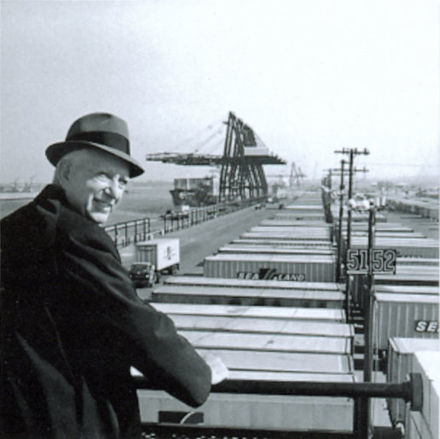
McLean by the railing, Port Newark, 1957. Image Source: Wikipedia.
In 1956, Malcolm McLean, a trucker from North Carolina, introduced a revolutionary concept: a stackable metal box that could move seamlessly between trucks, trains, and ships.
The result? A monumental shift:
Costs dropped by over 90%.
Loading times were cut from weeks to hours.
Trade became faster, cheaper, and more reliable.
McLean’s idea wasn’t just about a container; it was about creating an entire system—specialized ships, cranes, and ports designed for efficiency.
Highway for VoIP: How to Stop Phone Fraud Before It Starts Tuesday, January 28th at 12:00 PM CT
Join Highway's SVP of Customer Success, Bo Carlton, and SVP of Product and Strategic Partnerships, Will Van De Kamp, as they delve into the critical fight against phone fraud for brokers.
Discover how Highway for VoIP is purpose-built to battle phone fraud, reduce risks to your operations and maintain client trust.
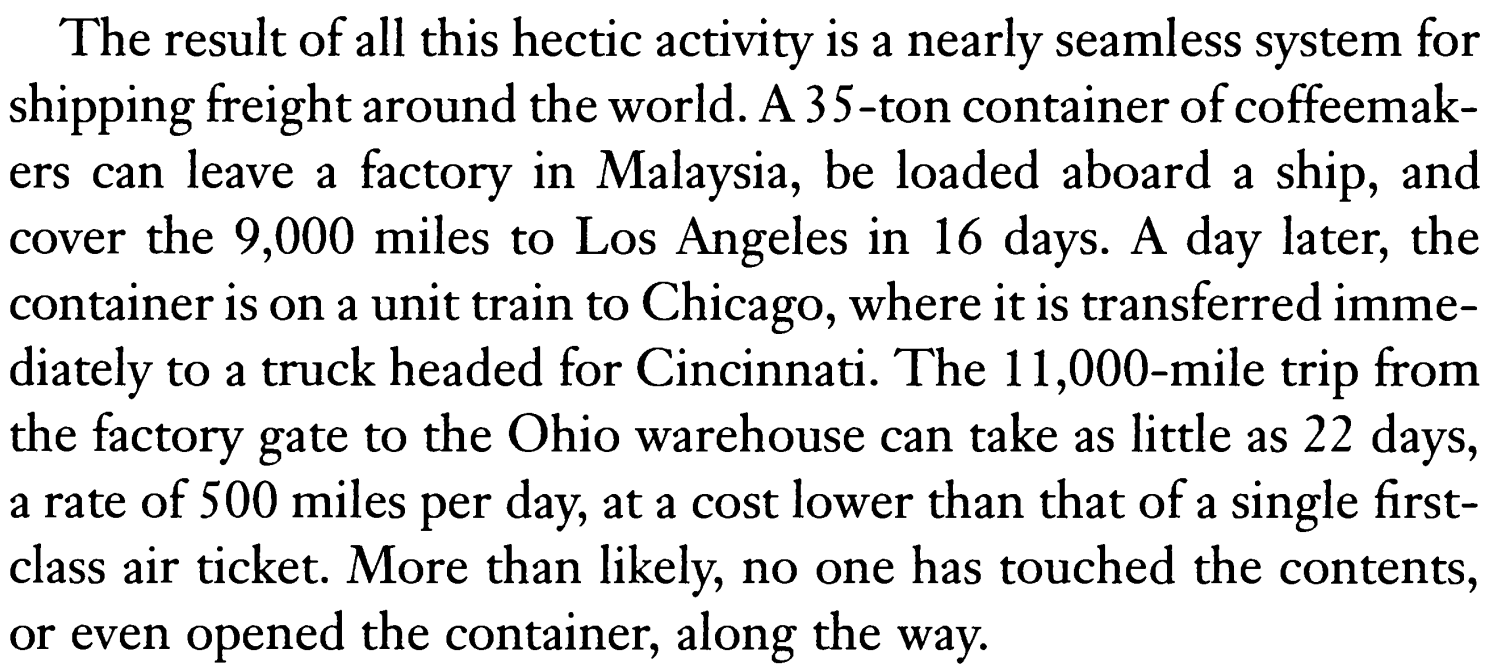
Excerpt from the book: The Box: How the Shipping Container Made the World Smaller and the World Economy Bigger. Source: marefa.org
The standardized container changed everything:
Trade Boomed: Manufacturers could move production overseas, accessing cheaper labor. This enabled globalization as we know it.
Ports Transformed: Small ports faded, while megahubs like Los Angeles, Shanghai, and Rotterdam rose to dominate.
Logistics Evolved: The rise of multimodal logistics opened new opportunities to connect shipments across modes seamlessly.
Global Standardization & Rapid Expansion
Early Military Influence: The military’s need to move supplies efficiently (especially during the Korean and Vietnam Wars) pushed containers into widespread use.
ISO Standards (1968–1970): Containers only truly took off after the International Organization for Standardization (ISO) set common sizes (most often 20 or 40 feet long). This allowed any container to fit on any ship or train, anywhere in the world.
Proliferation: By the 1970s, most major ports had retooled for container shipping. Cities like New York discovered that older piers were too cramped, while Los Angeles and Rotterdam developed vast, specialized terminals.
The numbers speak volumes:
In 2010, containers accounted for 60% of all seaborne trade.
By 2012, there were around 20.5 million intermodal containers in use worldwide.
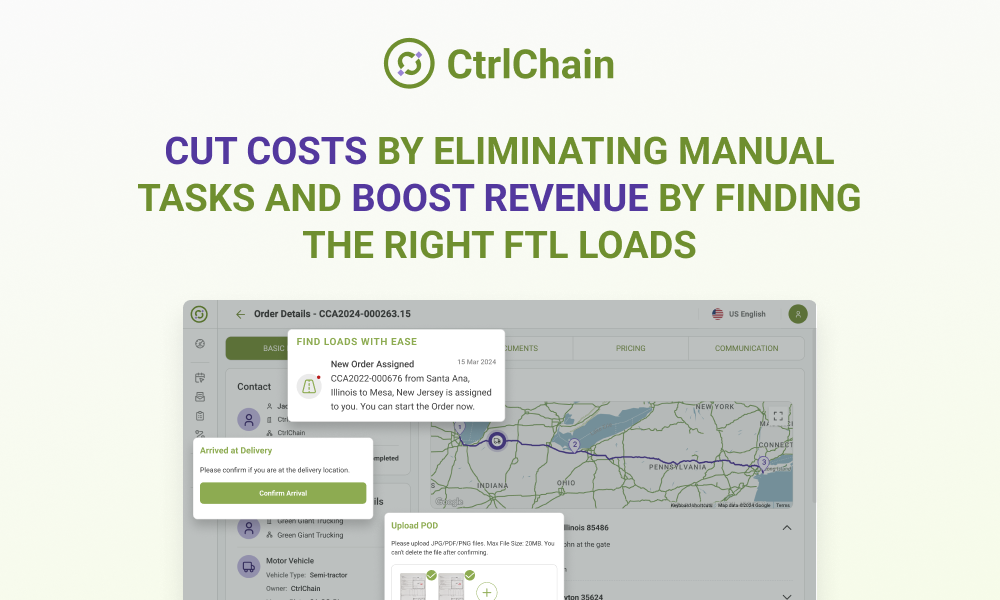
CtrlChain is a cost-effective solution that helps carriers secure more contract freight with reliable shipper companies. The company emphasizes stable income for carriers by fostering long-term, mutually beneficial partnerships between carriers and shippers.
CtrlChain system simplifies the day-to-day tasks of fleet owners and operators by digitizing and automating manual tasks such as managing delivery information, updating customers, and providing PODs. It replaces spreadsheets, emails, phone calls, and post-it notes by offering a single platform for planning, executing, and receiving payments for deliveries.
The humble shipping container “made the world smaller and the world economy bigger,” as author and economist Marc Levinson said. It changed the way we do business globally, cutting costs and fueling global trade.
Plus, a carrier pleading guilty to mob money laundering while still FMCSA-active, Iran's first post-ceasefire attack and what it means for diesel surcharges, FedEx Freight's first earnings as a standalone company, and more in today's newsletter.
Bad carriers are gaming the weigh station system. Plus, C.H. Robinson's own engineer goes scorched earth on Reddit, the Ghost Truck Act gets roasted, and more in today's newsletter.
Keep up with the freight broker world in 5 minutes.
Join over 14K+ subscribers to get the latest freight news and entertainment directly in your inbox for free. Subscribe & be sure to check your inbox to confirm (and your spam folder just in case).