66% of logistics pros say talent quality — not cost — is the #1 factor in choosing a nearshore partner. Rapido's integration model explains why that's the right question to be asking.
Plus, a carrier pleading guilty to mob money laundering while still FMCSA-active, Iran's first post-ceasefire attack and what it means for diesel surcharges, FedEx Freight's first earnings as a standalone company, and more in today's newsletter.
Freight brokers are measuring their inboxes wrong. Most inbound email is monitoring, not work. And the longtail categories that look like noise are costing real margin. Here's how to audit what's actually in your inbox, and why it matters in 2026's margin-first market.
Ryan Soskinhas seen every side of the freight tech cycle in his sixteen years in the industry. Started as a reefer carrier rep at Coyote Logistics and then became employee #15 at Convoy, where he spent nearly five years helping build the contract pricing team.
Now, as Co-Founder and CEO atGoodShip, a freight orchestration and procurement platform, he’s convinced the next phase of freight tech won’t be about replacing people — it’ll be about helping them finally understand their own networks.
Today's Newsletter is Brought to You By FreightFlex.
Why Freight Data Doesn’t Fix Carrier Pricing Without Network Context
Recently, GoodShip announced two new developments:
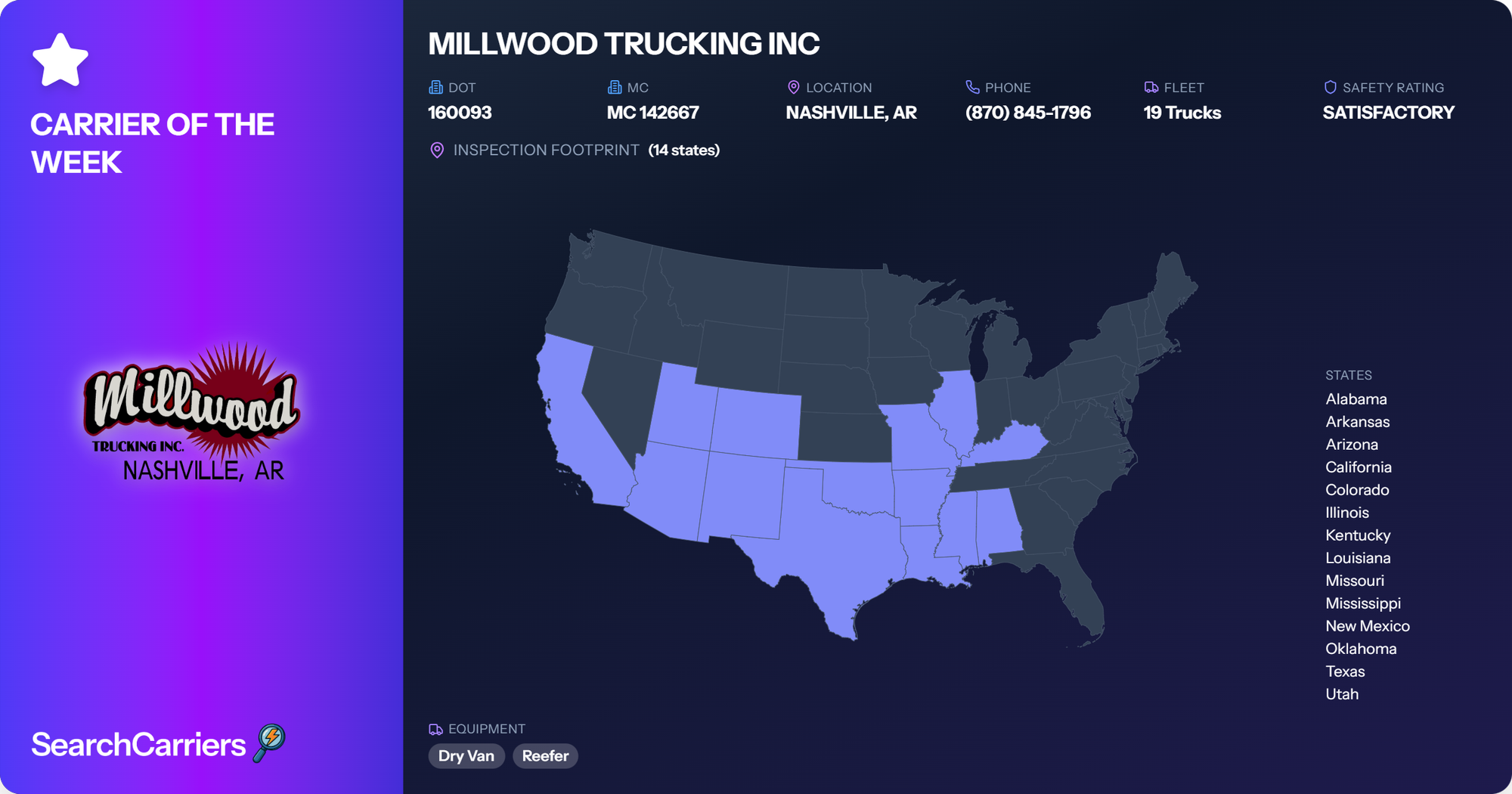
A partnership with GenLogsthat gives shippers direct carrier discovery capabilities inside GoodShip
Together, they point to a larger shift across freight tech: the next battleground won’t be data collection, but intelligence and interpretation.
Why RFPs Break Without Network Context
Having spent three years running contract pricing at Convoy, Ryan saw firsthand why RFPs (Request for Proposals) are broken.
The issue wasn’t only that they were manual, it was that carriers and brokers lacked the context needed to price freight.
Too much disconnected data and not enough usable intelligence.
Most carriers already have the data, they just don’t have the infrastructure to interpret it fast enough.
Breaking It Down
GoodShip has two core layers:
Orchestration:
GoodShip connects data across TMS platforms, and all your other source systems, unifying that, and giving you a comprehensive view of what’s going on in your network.
Then, using AI to pinpoint hotspots where there are optimization opportunities, connects the data showing you insights where to improve their business
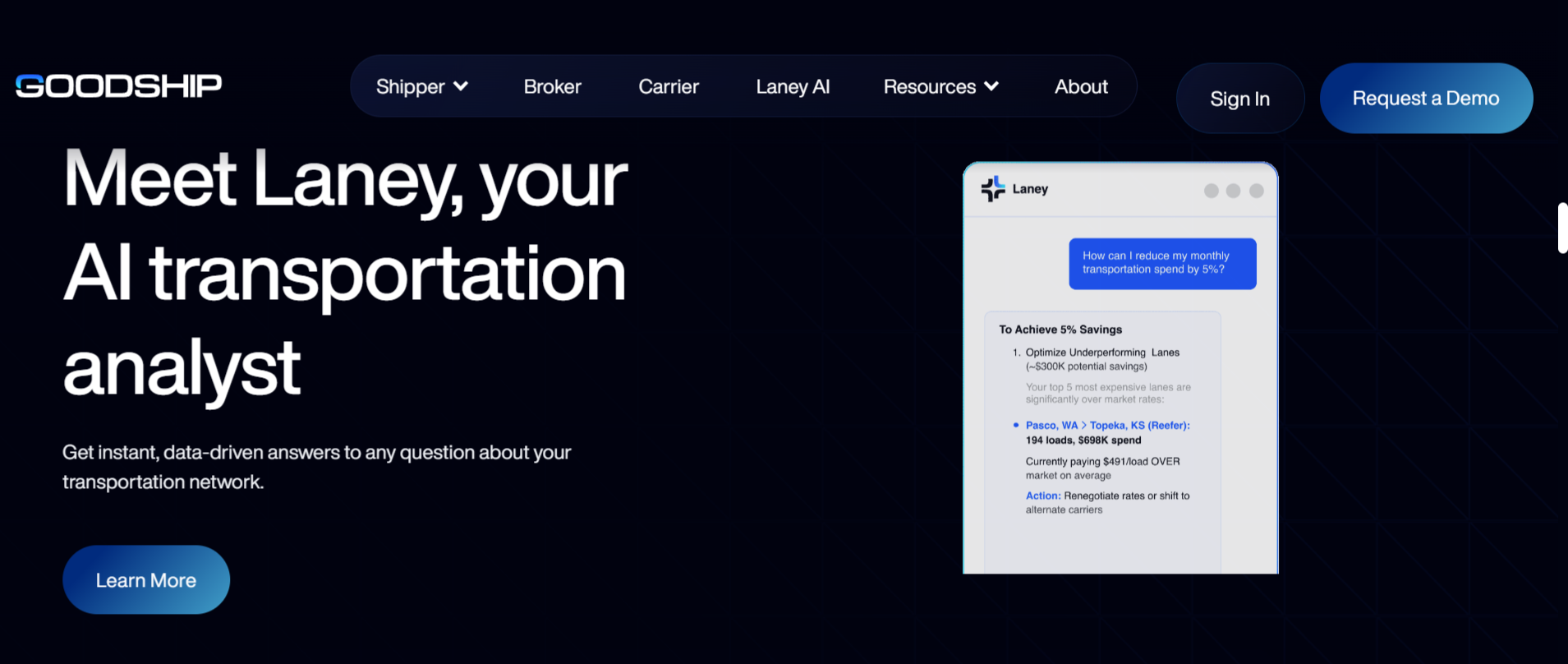
Using Laney
Thanks to GoodShip’s AI transportation analyst, Laney, that sits on top of that operational data layer, you can ask any question and have intelligence at your fingertips.
One example Ryan shared:
A customer needed help preparing for an upcoming QBR with a shipper.
Laney generated:
the customer footprint
performance summaries
strengths
areas of opportunity
It has access to all your source system data, from TMS to ERP to fuel schedules and facility information.
The platform helps carriers quote freight based on the strategy of their network. The secret sauce is having the orchestration layer- all the analytics and all the network context feeds into that workflow.
“We’re basically saying, ‘Here’s all the characteristics of this lane based on your historical data, to help form a smarter, better response.”
GoodShip’s pricing engine allows carriers to upload an RFP spreadsheet and compare it against the last 12–24 months of historical freight data.
The system then evaluates:
historical performance
network fit
lane density
roundtrip potential
and strategic alignment
The Bigger Picture
GoodShip has positioned itself not as another TMS, but as an intelligence layer sitting above the operational stack.
For years, freight tech focused heavily on execution: digital brokerage, automation, visibility, and workflow tools. The next wave appears to be shifting toward decision support.
The real promise of AI in freight today may not be replacing labor, but shortening the time required to make those decisions.
Reed Loustalot, Paul-Bernard Jaroslawski, and Ryan Soskin.
“When I say you’re going to require high levels of authenticity and authentication at the point of entry... that is no longer going to be enough to prevent access. You’re going to need multiple points that all need to match in order to unlock access- that’s where we’re going."
“Hold on, we've got something here where these guys are hungry to grow. We're hungry to grow." So, if we work together, we can help them grow their business."
Keep up with the freight broker world in 5 minutes.
Join over 14K+ subscribers to get the latest freight news and entertainment directly in your inbox for free. Subscribe & be sure to check your inbox to confirm (and your spam folder just in case).