66% of logistics pros say talent quality — not cost — is the #1 factor in choosing a nearshore partner. Rapido's integration model explains why that's the right question to be asking.
Plus, a carrier pleading guilty to mob money laundering while still FMCSA-active, Iran's first post-ceasefire attack and what it means for diesel surcharges, FedEx Freight's first earnings as a standalone company, and more in today's newsletter.
Freight brokers are measuring their inboxes wrong. Most inbound email is monitoring, not work. And the longtail categories that look like noise are costing real margin. Here's how to audit what's actually in your inbox, and why it matters in 2026's margin-first market.
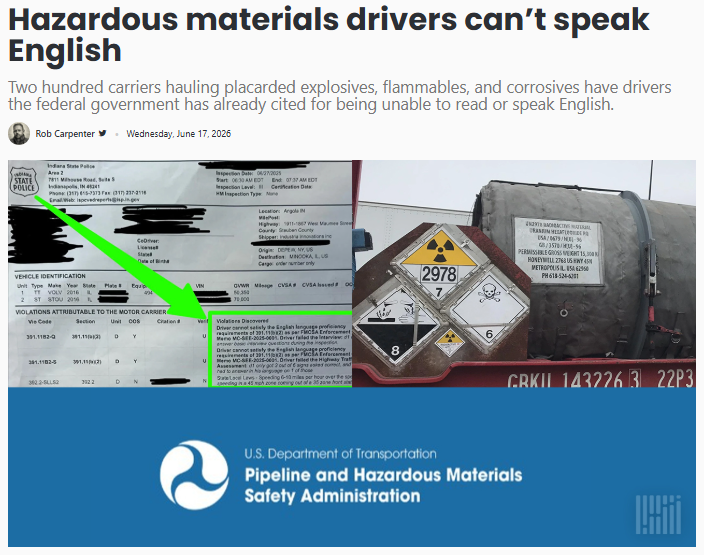
Rob Carpenter ranthe FMCSA database for every carrier cited on both English proficiency and hazmat — 200 came back, with 3,000+ English citations and 600+ hazmat out-of-service orders between them. Translation: placarded explosives and corrosives moving on drivers the feds already flagged as unable to read the warning. Freight X lost it, and the loudest voices were the guys who haul this stuff themselves.
The trigger:
fireworks trailer that burnedon I-75 near Chattanooga with no hazmat endorsement, no placards, no shipping papers — firefighters had no idea what was in it
The standout carrier — Quality Tank, a Mexican tanker operator with 98 English-proficiency citations and 86 hazmat violations; the latest English citation logged this past April
The gut-punch case: Harjinder Singh, whose crashkilled three, answered 2 of 12 basic English questions in his post-crash assessment
Road Hard Fitness, from experience: he used to work alongside drivers who could barely speak English hauling crude oil in West Texas
viv7 pointed at the overlap — a lot of these are the same carriers running illegal 24/7 on their ELDs
Carpenter's point cuts past the politics the replies kept reaching for: the placard, the papers, and the endorsement are the only things a firefighter has in the first minutes of a hazmat fire — and that entire chain assumes a driver who can read the warning and answer "what's in the truck." The data says that assumption fails thousands of times a year. The information was never the problem.
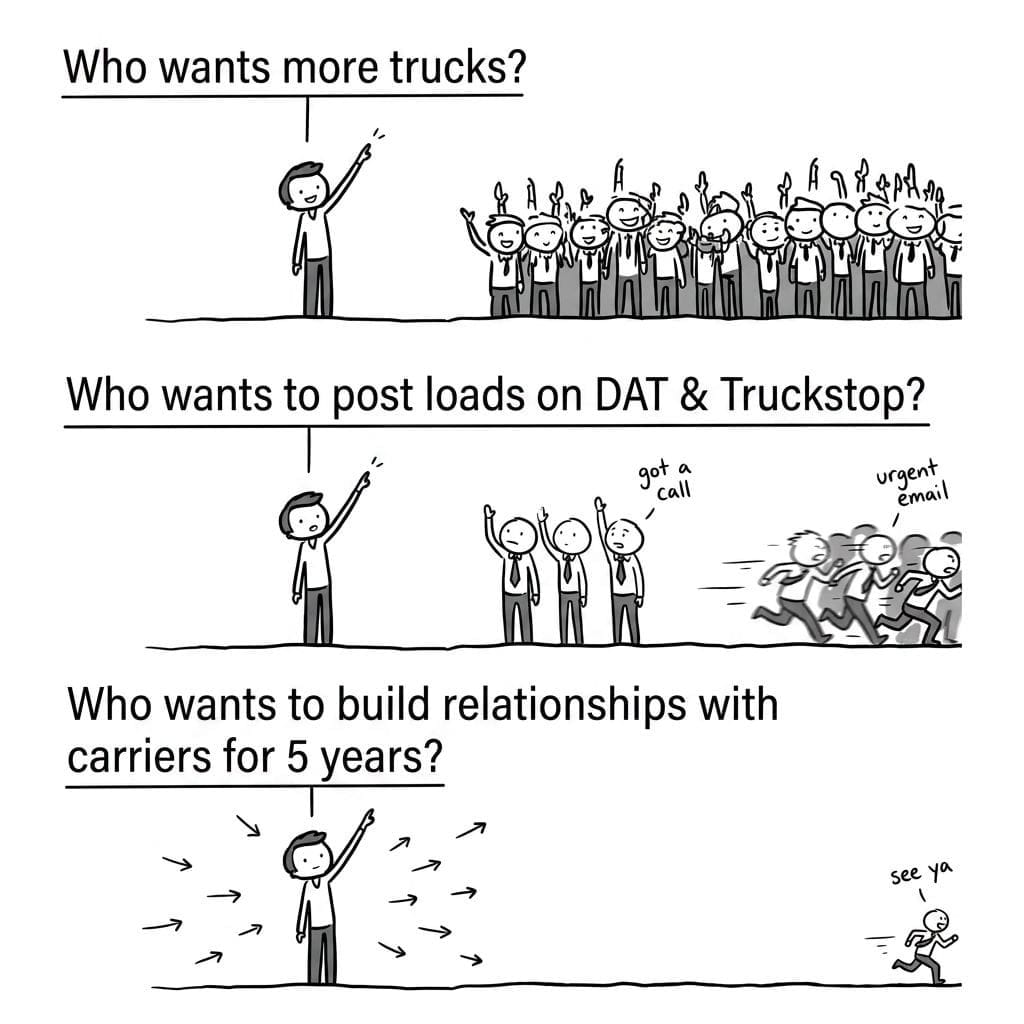
Colby Baskin of Cowtown Logistics hita nerve: everybody wants more trucks, nobody wants to do the work to get them. Posting a load and waiting for the perfect truck to show up is dying — the brokers who win pair technology with real carrier relationships. Following comments supported:
Coach Dave: invest in tools first and execution still feels uncertain — without trusted relationships, speed just amplifies risk instead of reducing it
Seth Suire: those 10-15 minute follow-up calls after onboarding turn a transactional carrier into a partner
Michael Zappone: AI doesn't replace relationship-building — it frees up time to do more of it
Shomari Edwards: the load board finds capacity, relationships find miracles
It hit because it's the opposite of the AI hype everyone's selling. The contrarian move now is to remind brokers that the phone still works — and that the carrier you trust beats a dart thrown at a load board at 2 a.m.
Trending on Reddit: A Burned-Out Broker, an Unsympathetic Crowd
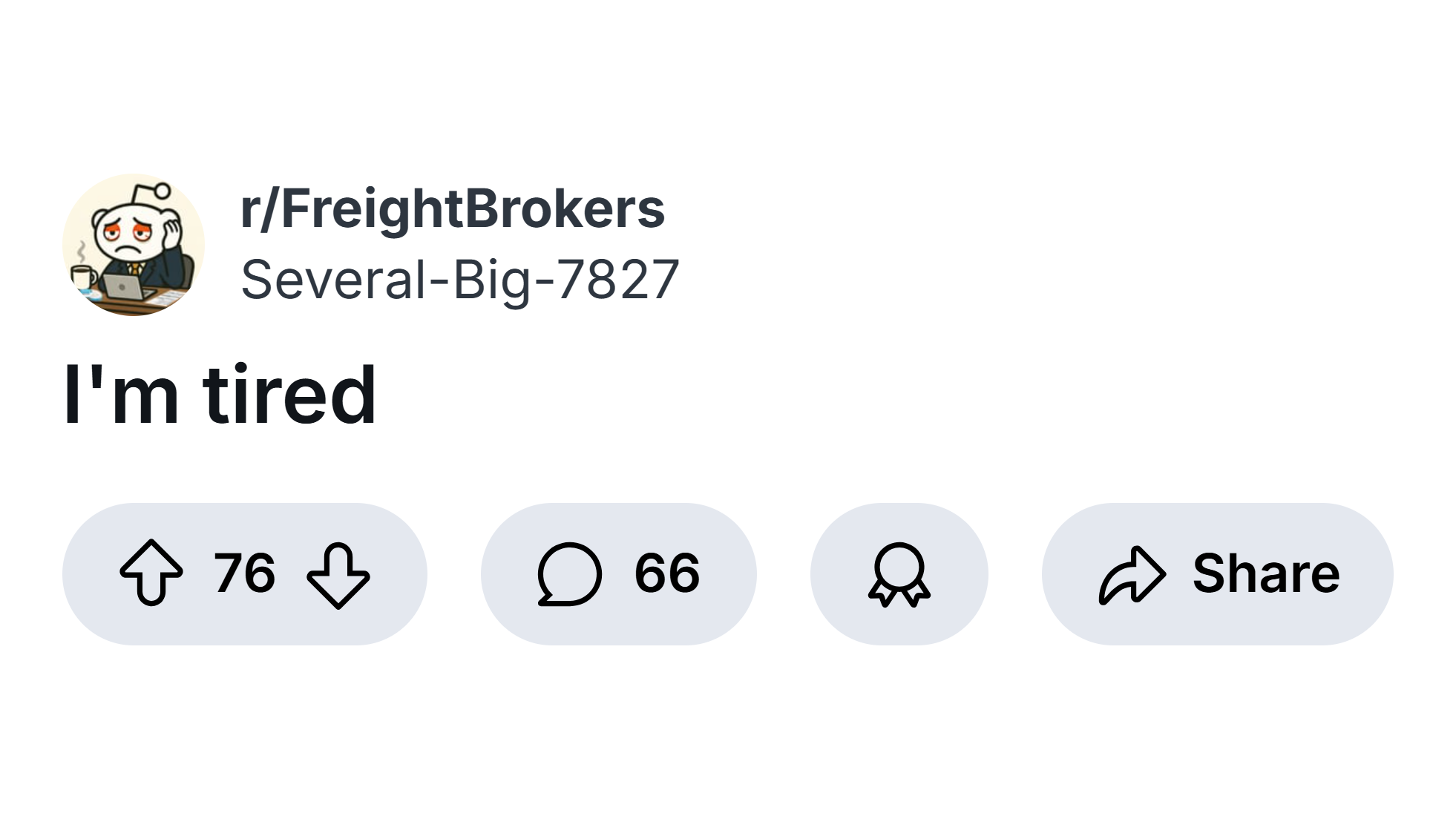
A broker who's done well since 2017 posted that the last few months have worn him down: loads going uncovered, every day a grind. The thread drew 66 comments, and the loudest ones came from carriers who waited years to say it: welcome to our world.
The bluntest of them: "Bro has to work for 4 months and 'is tired' — soft hands brother soft hands."
Carriers say they're keeping score. One described a list of brokers who lowballed them when capacity was cheap: "We have a list of the ones who tried screwing us when they had the upper hand."
The fix, repeated by carriers and veteran brokers alike: stop quoting below market. "Up your rates… of course it'll get better."
The OP pushed back, saying he's no lowballer: he paid his regulars 10-20% over market for five years, and the problem now is just covering average freight.
"The market always tells the truth," as one carrier put it — and right now it's telling brokers what carriers heard for years: take the rate or watch it leave.
Trending on Instagram: What DOT's English Test Actually Looks Like
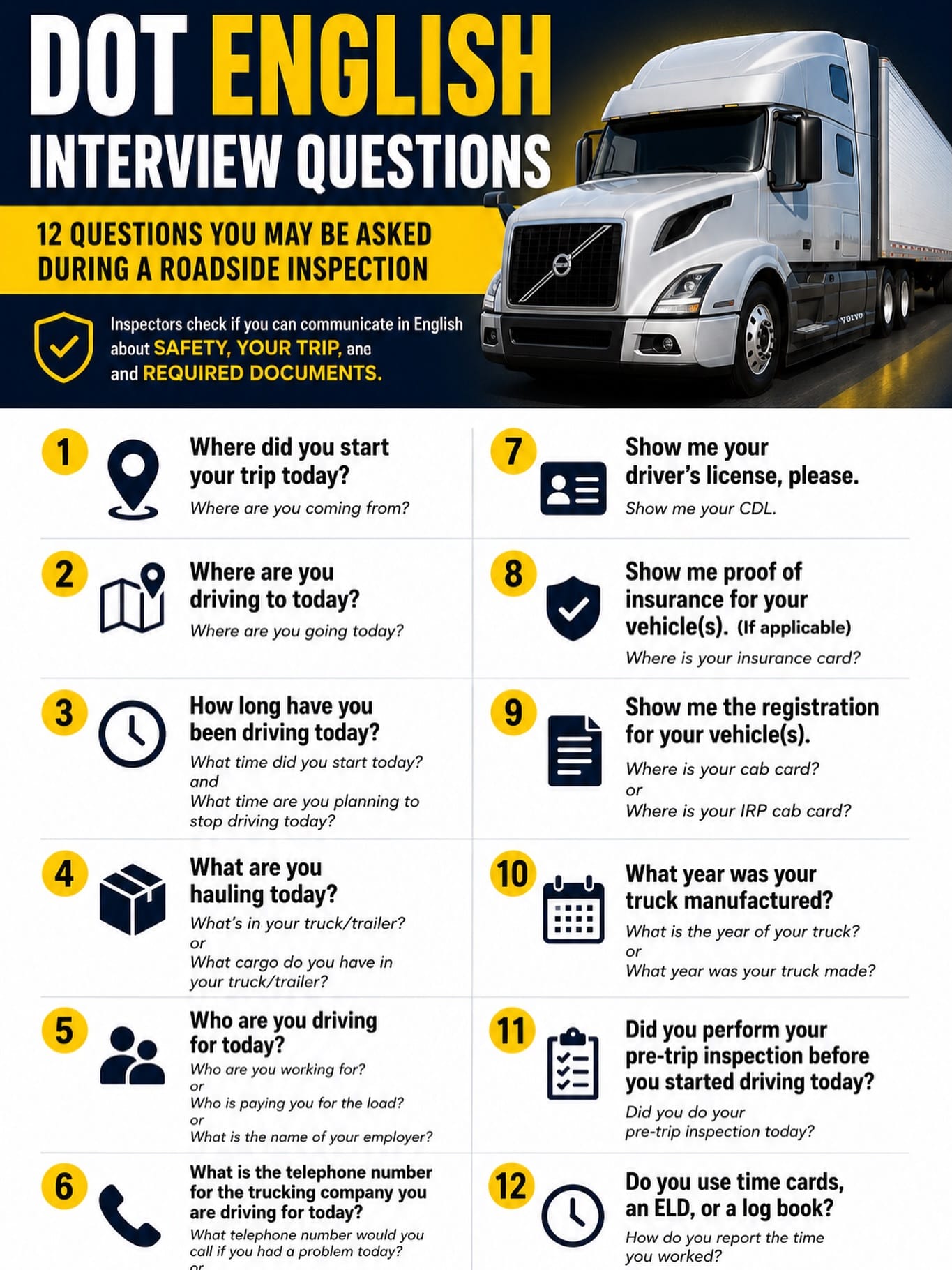
USA Transportation visited a North Carolina weigh station and posted the questions DOT officers are using to enforce the FMCSA English-proficiency rule at roadside. One officer told him he'd put three drivers out of service this week alone for failing to communicate in English.
The screening is basic communication stuff: where your trip started and where you're headed, what you're hauling, hours of service and ELD use, who you're driving for, and the company's contact number.
Then the document checks: CDL, proof of insurance, registration, truck year, and whether you did a pre-trip.
The stakes are real: since June 25, 2025, failing the English assessment is an automatic out-of-service. It's a rule that sat dormant under a 2016 memo until it was revived and written into federal law. One January 2026 blitz sidelined nearly 500 drivers for not speaking English in three days.
The bar isn't exactly Shakespeare, either. One driver in the comments said his check at a Utah scale came down to identifying 17 of 25 road signs and reading three pages of Green Eggs and Ham aloud. Pass the Dr. Seuss, keep your CDL.
Trending on YouTube: Inside Japan's Driver-Hour Crackdown
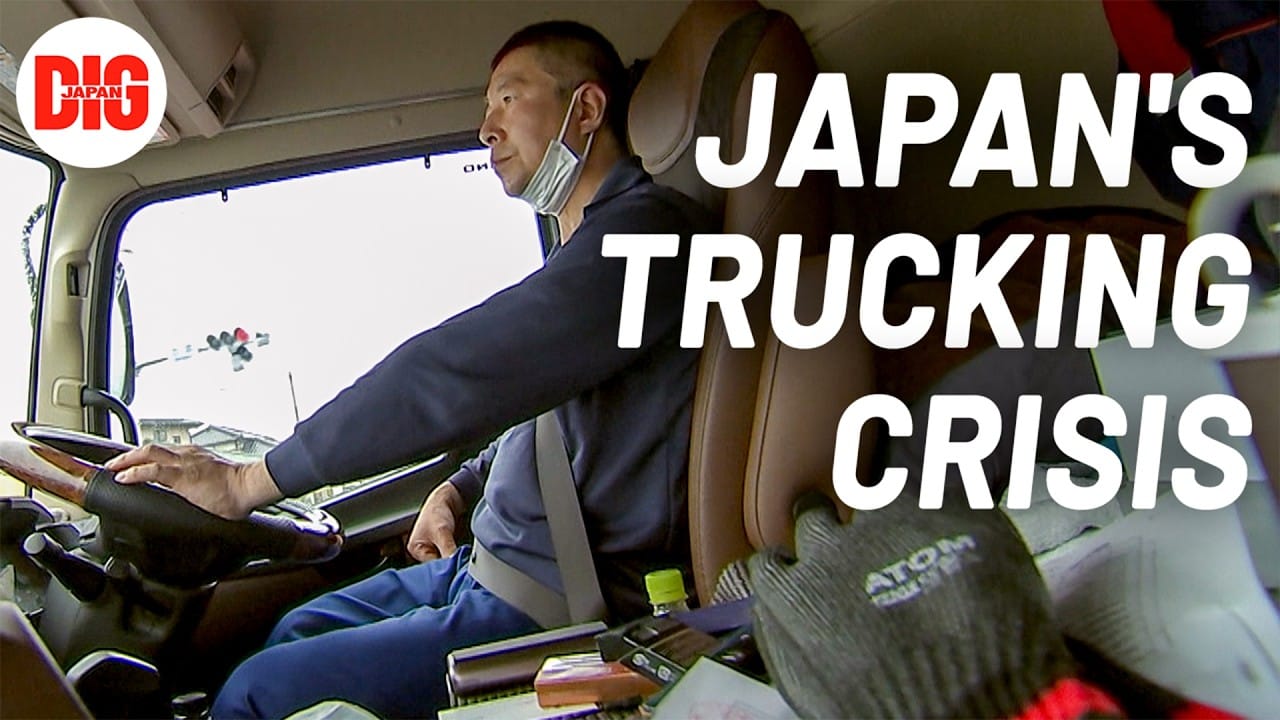
A new doc (300k+ views in under a week) rides along with a 30-year Japanese trucker on a three-day, two-night haul to Kobe. He says that, strictly applied, 80% of his job would now be illegal under Japan's 2024 work rules.
What the video shows:
The rule: Since April 2024, Japan has capped truck-driver overtime at 960 hours a year (about 80 hours a month) and tightened rest and driving limits — continuous driving maxes at four hours, daily driving averages at nine hours. Before this, there was effectively no limit.
Why he's in violation: His problem isn't driving too fast; it's too little rest between shifts. His multi-day, sleep-in-the-cab pattern is what the new rules target, and the time disappears at the dock: he waits for hours to load, then times a midnight arrival to pay the cheaper night toll.
The bind: Japanese drivers work about 20% longer than the average worker but earn about 10% less. Cut the hours, and you cut the pay.
The comments proved it's universal: US, UK, EU, and Australian drivers all flagged the same two things: nowhere to park for required rest, and hours lost waiting at docks. The Americans were less sympathetic, though: US rules allow 11 hours of driving in a 14-hour day, so to them Japan's 7.5-hour haul looked light — "12 hours is a half day," one wrote.
Plus, a carrier pleading guilty to mob money laundering while still FMCSA-active, Iran's first post-ceasefire attack and what it means for diesel surcharges, FedEx Freight's first earnings as a standalone company, and more in today's newsletter.
Bad carriers are gaming the weigh station system. Plus, C.H. Robinson's own engineer goes scorched earth on Reddit, the Ghost Truck Act gets roasted, and more in today's newsletter.
Keep up with the freight broker world in 5 minutes.
Join over 14K+ subscribers to get the latest freight news and entertainment directly in your inbox for free. Subscribe & be sure to check your inbox to confirm (and your spam folder just in case).