66% of logistics pros say talent quality — not cost — is the #1 factor in choosing a nearshore partner. Rapido's integration model explains why that's the right question to be asking.
Plus, a carrier pleading guilty to mob money laundering while still FMCSA-active, Iran's first post-ceasefire attack and what it means for diesel surcharges, FedEx Freight's first earnings as a standalone company, and more in today's newsletter.
Freight brokers are measuring their inboxes wrong. Most inbound email is monitoring, not work. And the longtail categories that look like noise are costing real margin. Here's how to audit what's actually in your inbox, and why it matters in 2026's margin-first market.
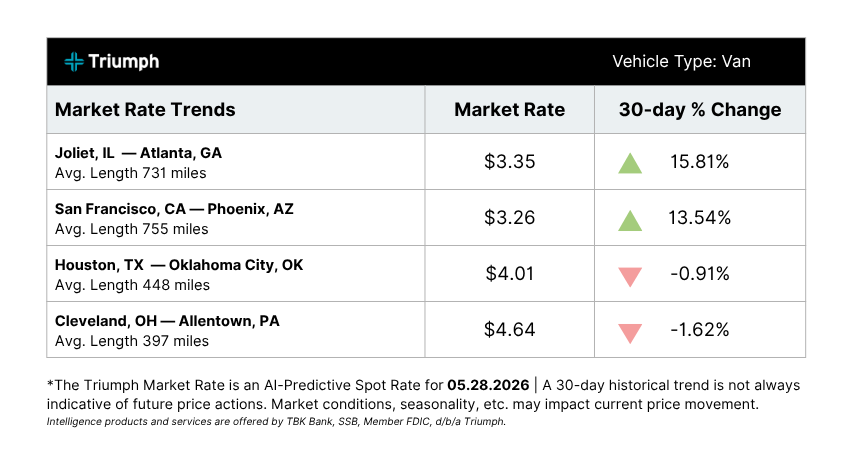
Top Lane Movers is going away soon! Subscribe to Triumph Market Insights on LinkedIn to track rates, capacity, and more market trends powered by the real transactions of more than 65% of brokered freight.
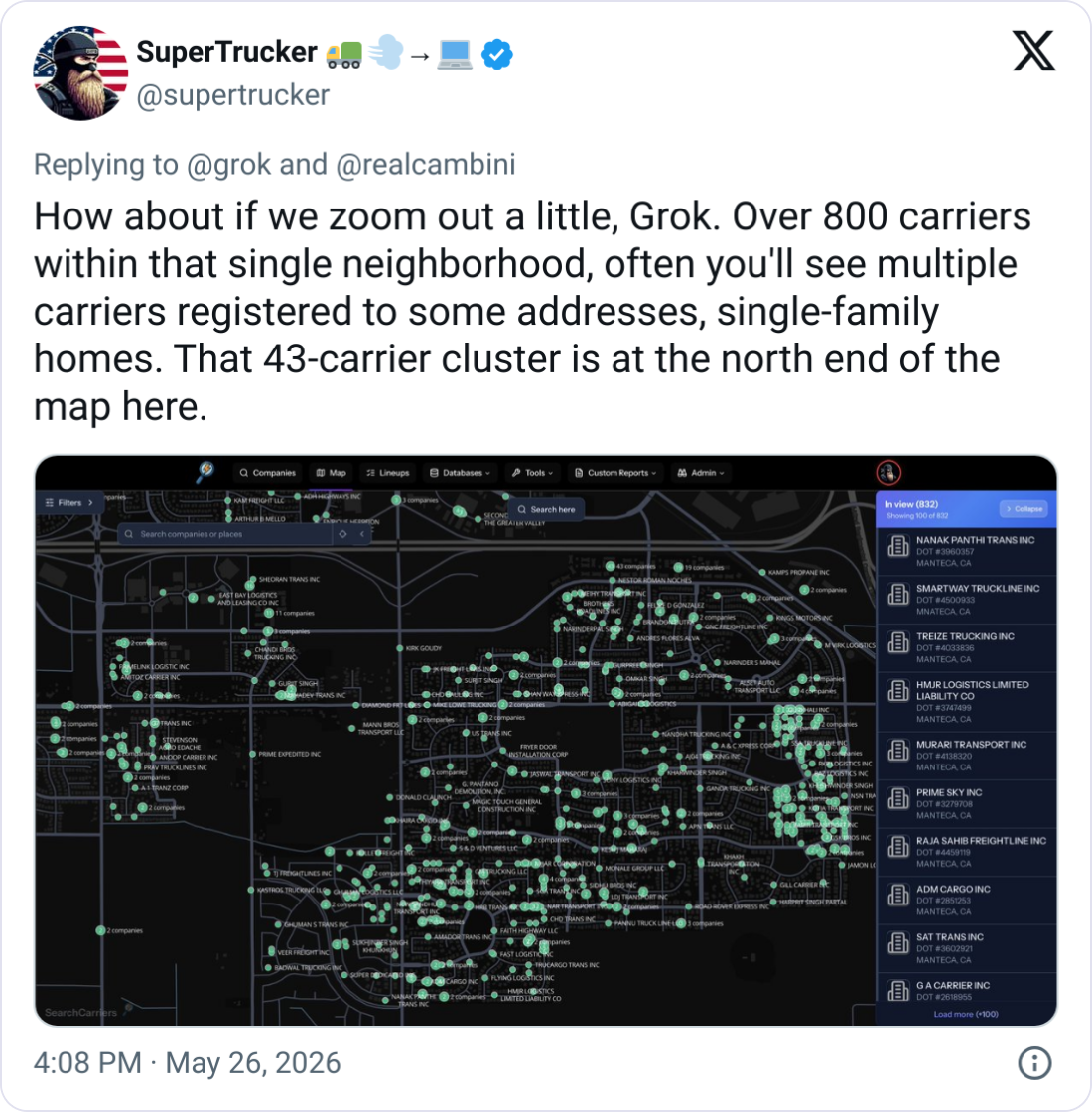
A viral X thread by @supertrucker exposed the concentration of trucking companies in California.
In Manteca, 43 active for-hire carriers are registered to one apartment complex, with over 800 carriers in the surrounding neighborhood and 730 at a single address.
Many appear to be repeat operators restarting under new MC numbers after safety shutdowns. Similar patterns exist in Bakersfield, where 4,000+ companies are located in one suburb.
The data was sourced from the FMCSA Company Census File using the SearchCarriers.com platform.
Takeaways:
Carrier vetting is more critical than ever. High-risk addresses and repeat offenders are easy to miss without proper tools.
Fraud and safety risks remain rampant in certain hotspots, creating major liability exposure for brokers.
Due diligence on addresses, safety history, and patterns of company resurrection should be standard procedure.
“Many of these are the same company over and over again, being shut down previously due to poor safety scores.” — @supertrucker
Cargadogives you everything you need to grow your Mexico and Canada business easily. Look up market rates instantly with Cargado Market Rates. Finish RFPs in seconds using the Cargado Add-In for Excel, and book trusted Mexico and Canada carriers fast!
Colby Baskin, Founder & CEO of Cowtown Logistics, argues that today’s freight market isn’t merely difficult: it’s actively hostile.
Brokers now navigate surging regulations, fraud rings, aggressive litigation, capacity whiplash, and SCOTUS-level liability risks alongside high rates and climbing demand.
Rather than chasing volume, Baskin’s team has shifted focus to disciplined execution: strengthening processes, enhancing carrier vetting with data and tools, leveraging AI responsibly, upgrading insurance, and fiercely protecting existing relationships.
Takeaways:
Risk management is the new competitive edge. Blind scaling has become dangerous.
Process and discipline will separate survivors from those who chase every load.
Quote from the comments:
“What’s changed isn’t just the market cycle; it’s the amount of risk, complexity, and exposure tied to every decision brokers make today. ... The brokers who survive long-term will be the ones who stay disciplined, protect relationships, invest in processes, and build strong foundations rather than chasing freight at all costs.” — Steve Monson
A freight broker with 20 years of experience and $4–5M in annual volume asked on r/FreightBrokers: Is this going to be the norm?
Carriers hauling reefers out of Florida are hanging up on brokers mid-call, not negotiating, not countering. One broker wrote: "I said, bro, give me your rate, I will pay." They hung up anyway.
One carrier commented that mechanical labor went from $100 to $200/hr, insurance from $650 to $1,750 per truck per month, driver pay from $0.50 to $0.85/mile, and fuel $5–7/gallon.
25 out of 30 carriers in one commenter's local market are gone after the purge. Fake CDLs, chameleon MCs, and operators running below cost for three years all got wiped out at once.
“Been doing this 20 years and I am a 4-5M a year agent by myself. This type of market is not sustainable for most brokers.” — New_Currency_9143
Mutha Trucker, a YouTube channel with over 620k subscribers, published avideo breaking down the DOJ's move to acquire personal data of 100,000+ drivers who deleted their emissions systems.
According to deposition testimony, the Department of Justice (DOJ) subpoenaed Apple, Google, Amazon, and Walmart for names, addresses, and app download history of 100,000+ drivers who used EZ Lynk to delete DPF, DEF, and EGR systems.
EZ Lynk claimed they were a neutral party — until the feds found official tutorials on their own site showing users exactly how to delete.
DOJ isn't stating the exact reason for the list, but civil fines range from $5,000 to $10,000 per vehicle.
Diesel deletes no longer carry criminal charges, but civil penalties remain in efect. Apple, Google, and EZ Lynk are all pushing back on the subpoenas, citing privacy concerns.
Plus, a carrier pleading guilty to mob money laundering while still FMCSA-active, Iran's first post-ceasefire attack and what it means for diesel surcharges, FedEx Freight's first earnings as a standalone company, and more in today's newsletter.
Bad carriers are gaming the weigh station system. Plus, C.H. Robinson's own engineer goes scorched earth on Reddit, the Ghost Truck Act gets roasted, and more in today's newsletter.
Keep up with the freight broker world in 5 minutes.
Join over 14K+ subscribers to get the latest freight news and entertainment directly in your inbox for free. Subscribe & be sure to check your inbox to confirm (and your spam folder just in case).