66% of logistics pros say talent quality — not cost — is the #1 factor in choosing a nearshore partner. Rapido's integration model explains why that's the right question to be asking.
Plus, a carrier pleading guilty to mob money laundering while still FMCSA-active, Iran's first post-ceasefire attack and what it means for diesel surcharges, FedEx Freight's first earnings as a standalone company, and more in today's newsletter.
Freight brokers are measuring their inboxes wrong. Most inbound email is monitoring, not work. And the longtail categories that look like noise are costing real margin. Here's how to audit what's actually in your inbox, and why it matters in 2026's margin-first market.
U.S. Consumer Spending and Confidence Drops in September
Examine the decline in U.S. consumer spending and confidence with insights from Fitch, BEA, BofA, and The Conference Board data, highlighting a potential upcoming recession.
U.S. consumer spending is facing a substantial slowdown as multiple factors converge.
The Bureau of Economic Analysis (BEA) released data illustrating a decline in U.S. consumer credit card spending on retail and food service (excluding gas stations). The percent difference in spending from the typical level (accounting for day of week, month, and annual trends) fell from 10.1% in August to 4% in September, highlighting a notable reduction.
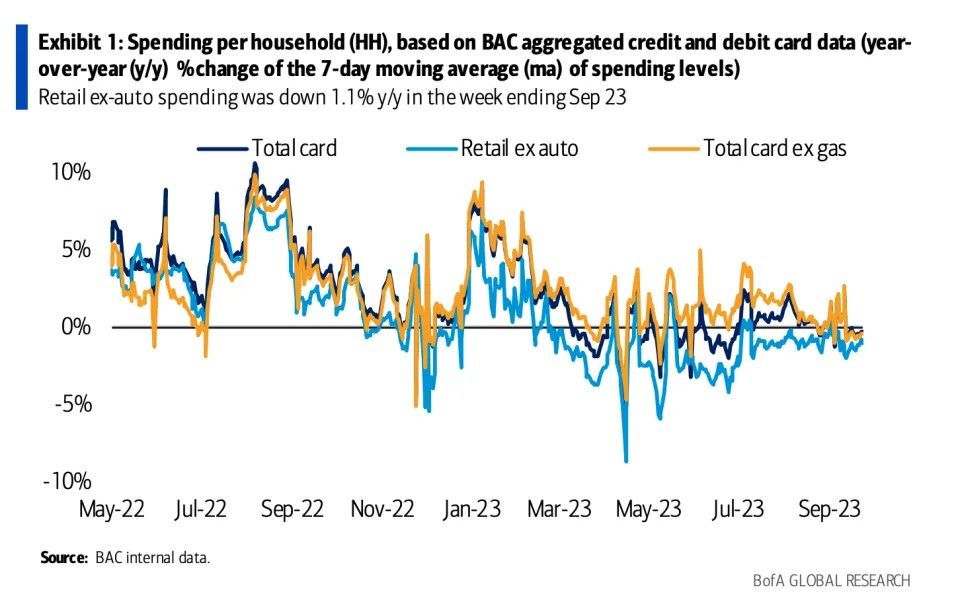
This trend echoes BofA's recent data, revealing a 0.3% decrease in credit card spending in the week ending Sept. 23 compared to last year, and a continuous downward trend excluding auto and gas purchases.
The Conference Board’s consumer confidence index further highlights this, plunging to 103 in September from 108.7 in August, with future expectations at a worrisome 73.7. Readings below 80 historically precede a recession within a year. Retail giants like Target and Home Depot already report declining sales, accentuating the alarm.
What's Impacting the Drop?
Higher Fuel Prices: Increases in fuel prices are leading to elevated expenses for consumers, reducing discretionary spending.
Resumption of Student Loan Payments: The end of the student loan payment freeze is putting additional financial strain on consumers, leaving less room for other expenditures.
Anticipated Economic Slowdown: Concerns over a potential economic downturn are causing consumers to tighten their budgets.
Rising Interest Rates: Higher interest rates are making financing and credit more expensive, discouraging big-ticket purchases.
Despite the current labor market strength, economists anticipate a more considerable consumption and overall economic downturn for the rest of the year.
I’m Adriana, a writer and editor at FreightCaviar. I’ve covered everything from freight tech to industry lawsuits and market shifts, helping scale us to almost 14K subscribers. My goal: to make logistics stories digestible, clear, and fun to read.
In a recent episode of the Stay In Your Lane Podcast from Triple T Transport, Allianz Trade North America Chief Economist Dan North shed light on why the anticipated economic recession hasn't yet materialized and its implications on the freight market.
Keep up with the freight broker world in 5 minutes.
Join over 14K+ subscribers to get the latest freight news and entertainment directly in your inbox for free. Subscribe & be sure to check your inbox to confirm (and your spam folder just in case).