66% of logistics pros say talent quality — not cost — is the #1 factor in choosing a nearshore partner. Rapido's integration model explains why that's the right question to be asking.
Plus, a carrier pleading guilty to mob money laundering while still FMCSA-active, Iran's first post-ceasefire attack and what it means for diesel surcharges, FedEx Freight's first earnings as a standalone company, and more in today's newsletter.
Freight brokers are measuring their inboxes wrong. Most inbound email is monitoring, not work. And the longtail categories that look like noise are costing real margin. Here's how to audit what's actually in your inbox, and why it matters in 2026's margin-first market.
UPS is considering humanoid robots for future operations, even as it plans to cut 20,000 jobs and shut down 73 facilities across its U.S. network in 2025. The dual development reflects the company’s evolving strategy to increase automation and reduce reliance on lower-margin e-commerce volumes—especially from Amazon.
Discussions with Figure AI Signal Next-Gen Automation
UPS is in active talks with Figure AI, a robotics startup developing humanoid robots for warehouse and logistics tasks. While the companies have not confirmed a partnership, discussions began in 2023 and have continued into this year.
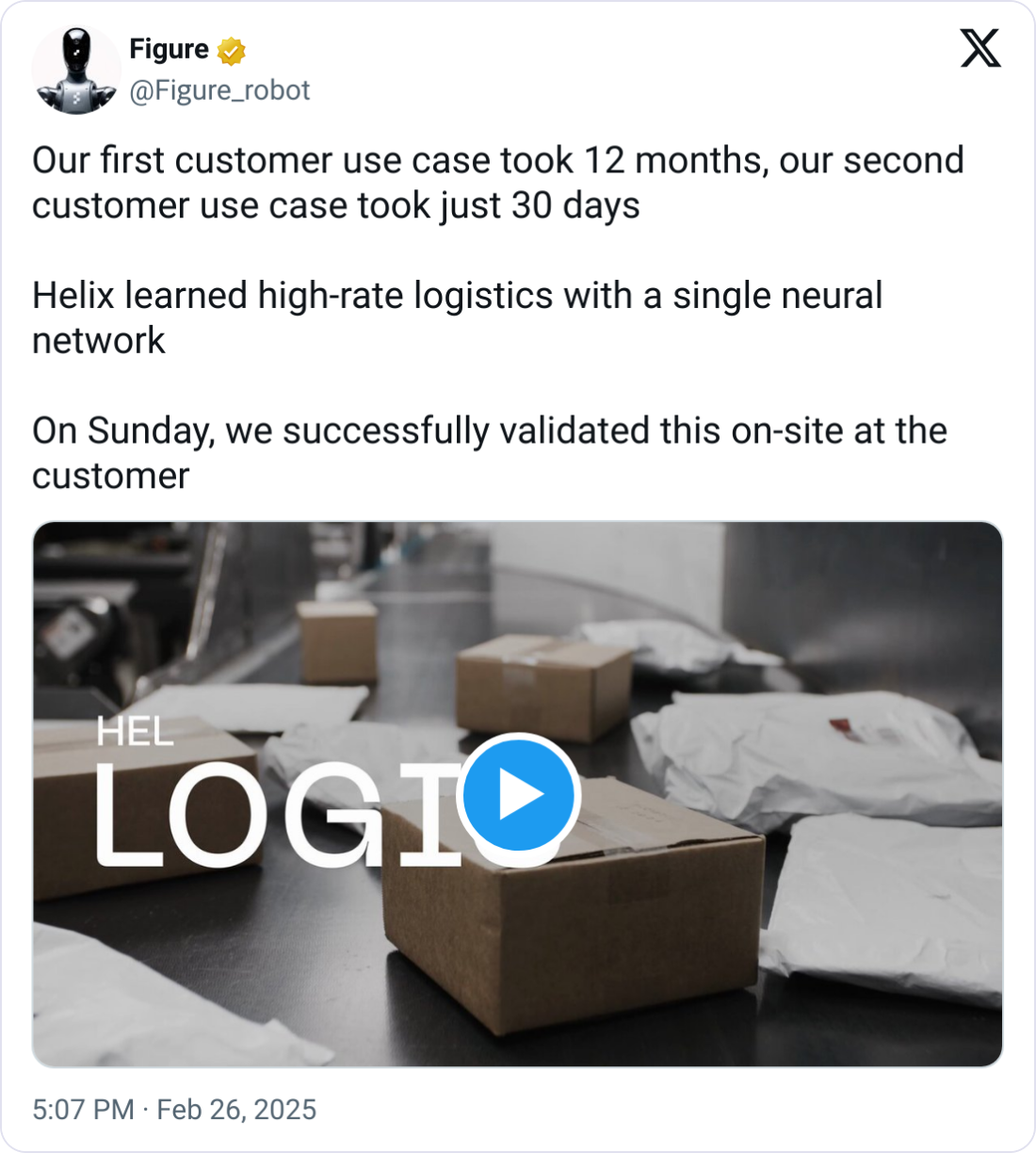
A Figure AI video posted in February showed one of its robots picking parcels beside a conveyor belt, hinting at possible roles in sorting or fulfillment. The company has emerged as a major player in the humanoid robotics space and is reportedly seeking to raise $1.5 billion at a $39.5 billion valuation, according to Bloomberg.
UPS did not confirm the partnership, stating only that it “regularly explores and deploys a wide range of technologies, including robotics.”
Currently, UPS uses robotic arms and AI-powered systems at its Velocity hubs and has partnered with Dexterity Inc. for more advanced warehouse robotics.
Largest Network Restructuring in Company History
At the same time, UPS is executing what CEO Carol Tomé called the company’s “largest network reconfiguration in our history,” driven by a planned 50% reduction in Amazon volume by mid-2026.
Key operational changes include:
20,000 job cuts in 2025
73 facility closures by June
An expected $3.5 billion in cost savings for 2025
64% of package volume now handled through automated sortation, up 4.5% YoY
Amazon volumes fell 16% in Q1, with similar declines expected in Q2 and steeper drops of 30% in Q3 and Q4. Tomé cited profitability concerns, noting that certain outbound shipments from Amazon fulfillment centers were “not profitable for us, nor a healthy fit for our network.”
As UPS reduces its footprint, it is emphasizing consumer access via The UPS Store, Drop Boxes, and Access Points—90% of Americans live within five miles of one of these locations.
Hello! I'm Jerome FreightCaviar! I’m into the politics of freight and the impact it will have worldwide. I'm always eager to learn more. Follow me on X @JeromeFreightC
Freight brokers are measuring their inboxes wrong. Most inbound email is monitoring, not work. And the longtail categories that look like noise are costing real margin. Here's how to audit what's actually in your inbox, and why it matters in 2026's margin-first market.
Learn how freight brokers can source vetted carriers faster using real lane activity, invoice-backed rate intelligence, and proactive fraud monitoring through OTR Select
Keep up with the freight broker world in 5 minutes.
Join over 14K+ subscribers to get the latest freight news and entertainment directly in your inbox for free. Subscribe & be sure to check your inbox to confirm (and your spam folder just in case).