66% of logistics pros say talent quality — not cost — is the #1 factor in choosing a nearshore partner. Rapido's integration model explains why that's the right question to be asking.
Plus, a carrier pleading guilty to mob money laundering while still FMCSA-active, Iran's first post-ceasefire attack and what it means for diesel surcharges, FedEx Freight's first earnings as a standalone company, and more in today's newsletter.
Freight brokers are measuring their inboxes wrong. Most inbound email is monitoring, not work. And the longtail categories that look like noise are costing real margin. Here's how to audit what's actually in your inbox, and why it matters in 2026's margin-first market.
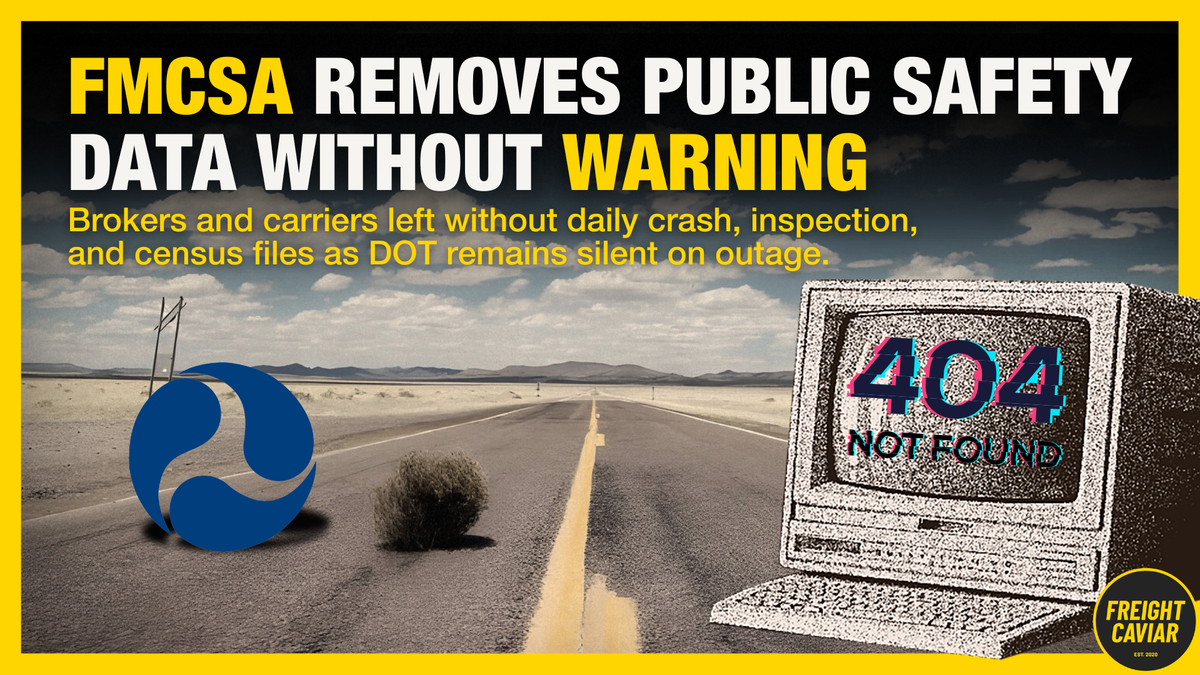
FMCSA restored key data sets on Tuesday after an outage sparked questions across the trucking industry. The disruption came as the U.S. Department of Transportation simultaneously announced a sweeping initiative to combat cargo theft and fraud.
FMCSA Blames Technical Glitch for Missing Data
On Sept. 17, multiple FMCSA datasets, including crash files, inspection records, and company census data, became inaccessible, displaying “404 errors.” The missing files triggered speculation online, as grassroots safety advocates rely on the information for carrier vetting and accountability.
By Wednesday morning, FMCSA confirmed the outage was caused by a technical error during routine updates. “A fix has since been applied,” the agency told FreightWaves, restoring access to the data.
Even as FMCSA worked to resolve its data outage, the DOT released a formal request for information to strengthen national efforts against cargo theft and fraud.
The department described two categories of risk: “straight thefts,” such as stolen trailers or loads from truck stops and terminals, and “strategic theft networks,” involving fraudulent carriers, staged diversions, cyber-enabled thefts, and insider collusion.
“Both categories create significant economic losses, disrupt supply chains, and in some cases fund broader illicit activities,” DOT stated. The agency added it may move to close loopholes that allow carriers removed from service to re-enter operations under new identities.
Cargo Theft on the Rise
The urgency is fueled by a sharp increase in incidents. According to Travelers Institute, cargo theft spiked more than 90% between 2021 and 2024, with average losses exceeding $200,000 per stolen load.
At a July 15 congressional hearing, industry testimony underscored the scale of the problem. “We’re talking about hundreds of thousands of dollars stolen in incidents across the United States with no resolution,” said Donna Lemm, chief strategy officer of an intermodal logistics company, on behalf of the American Trucking Associations. Her firm reported thefts rising from just five in 2021 to 876 in 2024.
Data Stability vs. Data Dependence
The timing of FMCSA’s outage raises questions about the reliability of public safety data precisely as DOT calls for expanded reporting and intelligence-sharing to fight theft. For brokers, shippers, and carriers, accurate and timely access to federal data is critical both for compliance and for addressing fraud.
The simultaneous glitch and crackdown reveal some form of tension: DOT is seeking more information and tighter oversight, but the infrastructure supporting that transparency remains vulnerable to disruptions.
Hello! I'm Jerome FreightCaviar! I’m into the politics of freight and the impact it will have worldwide. I'm always eager to learn more. Follow me on X @JeromeFreightC
Plus, Super Ego fires back at 60 Minutes, China tells Maersk and MSC to exit Panama ports, New York loses $73.5 million over non-domiciled CDLs — and more in today's newsletter.
Keep up with the freight broker world in 5 minutes.
Join over 14K+ subscribers to get the latest freight news and entertainment directly in your inbox for free. Subscribe & be sure to check your inbox to confirm (and your spam folder just in case).