66% of logistics pros say talent quality — not cost — is the #1 factor in choosing a nearshore partner. Rapido's integration model explains why that's the right question to be asking.
Plus, a carrier pleading guilty to mob money laundering while still FMCSA-active, Iran's first post-ceasefire attack and what it means for diesel surcharges, FedEx Freight's first earnings as a standalone company, and more in today's newsletter.
Freight brokers are measuring their inboxes wrong. Most inbound email is monitoring, not work. And the longtail categories that look like noise are costing real margin. Here's how to audit what's actually in your inbox, and why it matters in 2026's margin-first market.
The looming government shutdown has the logistics sector on edge as they anticipate significant delays and operational hiccups. The odds of a shutdown stand at 87%, potentially furloughing a massive number of federal employees.
For the freight industry, the majority of agencies would be unable to ensure normal operations. Concerns loom particularly over the Federal Maritime Commission and Surface Transportation Board, where furlough rates stand at 94% and 99%, respectively. The halt in regulatory and investigative activities could bring a significant slowdown in freight movement.
At the borders, concerns rise as U.S. Customs and Border Protection inspectors may lack the necessary resources for effective compliance checks. This could result in importers and exporters facing challenges in confirming the compliance of certain entries, with additional personnel shortages at partner agencies like the Consumer Product Safety Commission exacerbating the situation.
Global Trade Impact
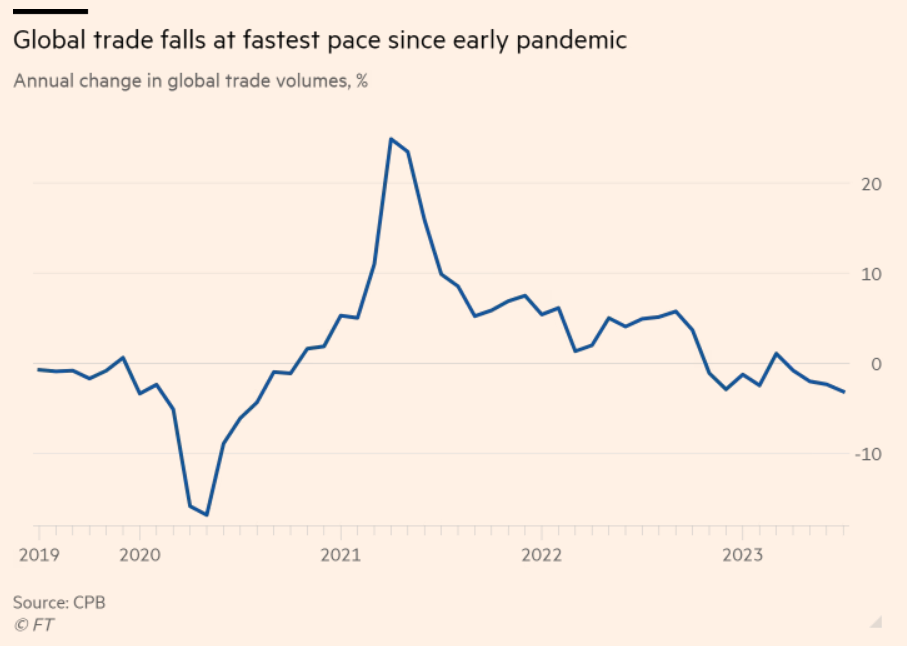
This shutdown, albeit a localized issue, parallels the global trade scenario, which is witnessing its most rapid decline since the pandemic. July recorded a 3.2%drop in trade volumes, echoing the rising impact of interest rate hikes and inflation on global goods demand. Despite the bleak outlook, a marginal 0.7% uptick in the US industrial output offers hope.
The shutdown, albeit a more localized issue, could further strain a global trade already in distress, marked by a sharp 3.2% decline in trade volumes in July 2023.
Graph showing an increase in the pace of global trade fall. The fastest pace since early pandemic times. Source: Financial Times
The resultant slowdown in global economic growth, heightened by geopolitical tensions and trade restrictions, underscores the critical need for stability and better infrastructure to navigate issues successfully.
I’m Adriana, a writer and editor at FreightCaviar. I’ve covered everything from freight tech to industry lawsuits and market shifts, helping scale us to almost 14K subscribers. My goal: to make logistics stories digestible, clear, and fun to read.
Mexico plans tariffs of up to 50% on Chinese goods, reshaping North American trade flows as C.H. Robinson rolls out a new U.S.–Mexico consolidation service to cut costs.
Peak season imports into the U.S. slowed sharply in 2025, with Chinese exports plunging 27% year-over-year and carriers cutting sailings as tariffs and inventory frontloading reshape trade flows.
The U.S. trade deficit narrowed 16% in June to $60.2 billion, its lowest since 2023, as imports fell sharply following tariff-driven surges earlier this year.
Keep up with the freight broker world in 5 minutes.
Join over 14K+ subscribers to get the latest freight news and entertainment directly in your inbox for free. Subscribe & be sure to check your inbox to confirm (and your spam folder just in case).