66% of logistics pros say talent quality — not cost — is the #1 factor in choosing a nearshore partner. Rapido's integration model explains why that's the right question to be asking.
Plus, a carrier pleading guilty to mob money laundering while still FMCSA-active, Iran's first post-ceasefire attack and what it means for diesel surcharges, FedEx Freight's first earnings as a standalone company, and more in today's newsletter.
Freight brokers are measuring their inboxes wrong. Most inbound email is monitoring, not work. And the longtail categories that look like noise are costing real margin. Here's how to audit what's actually in your inbox, and why it matters in 2026's margin-first market.
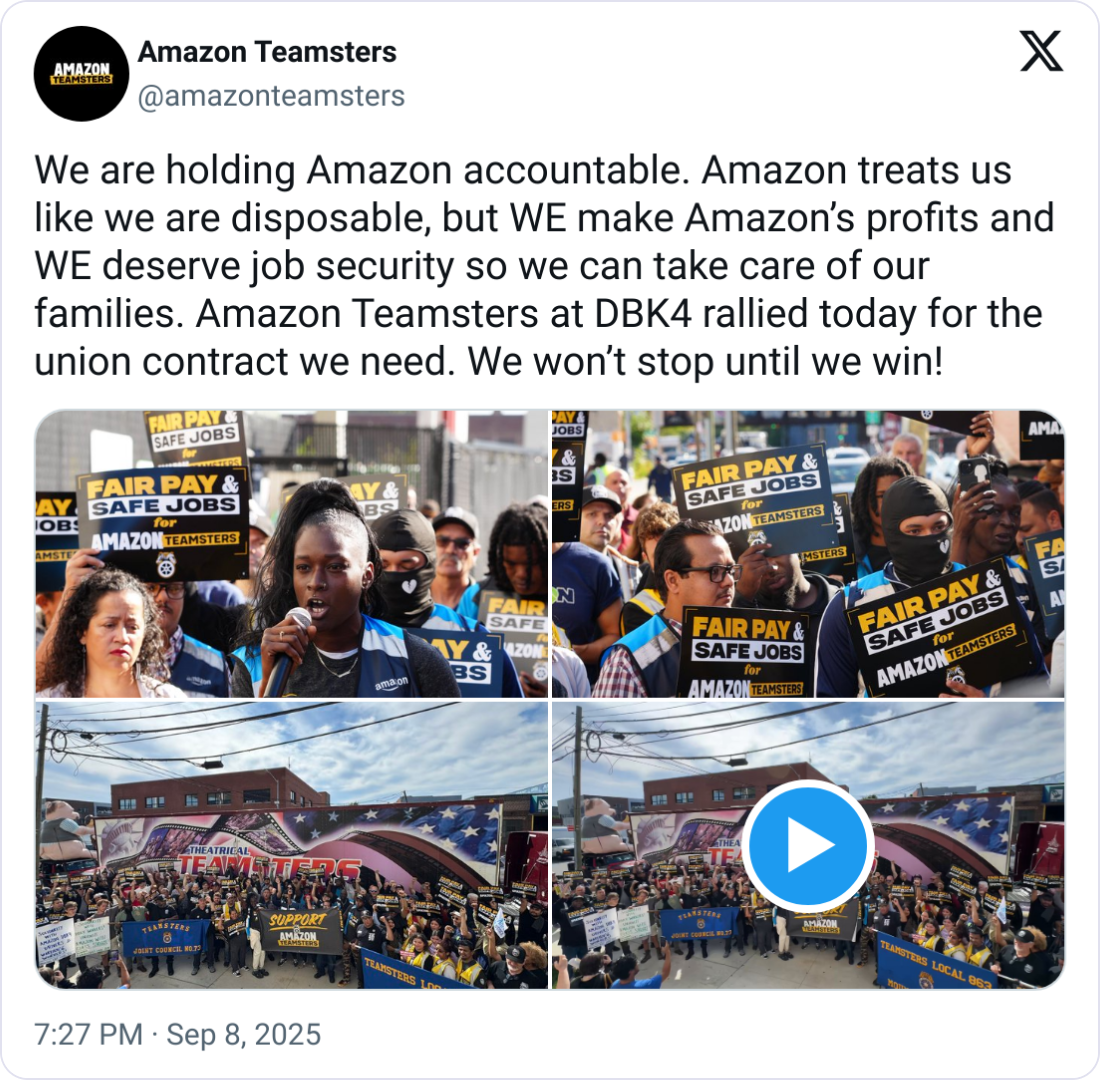
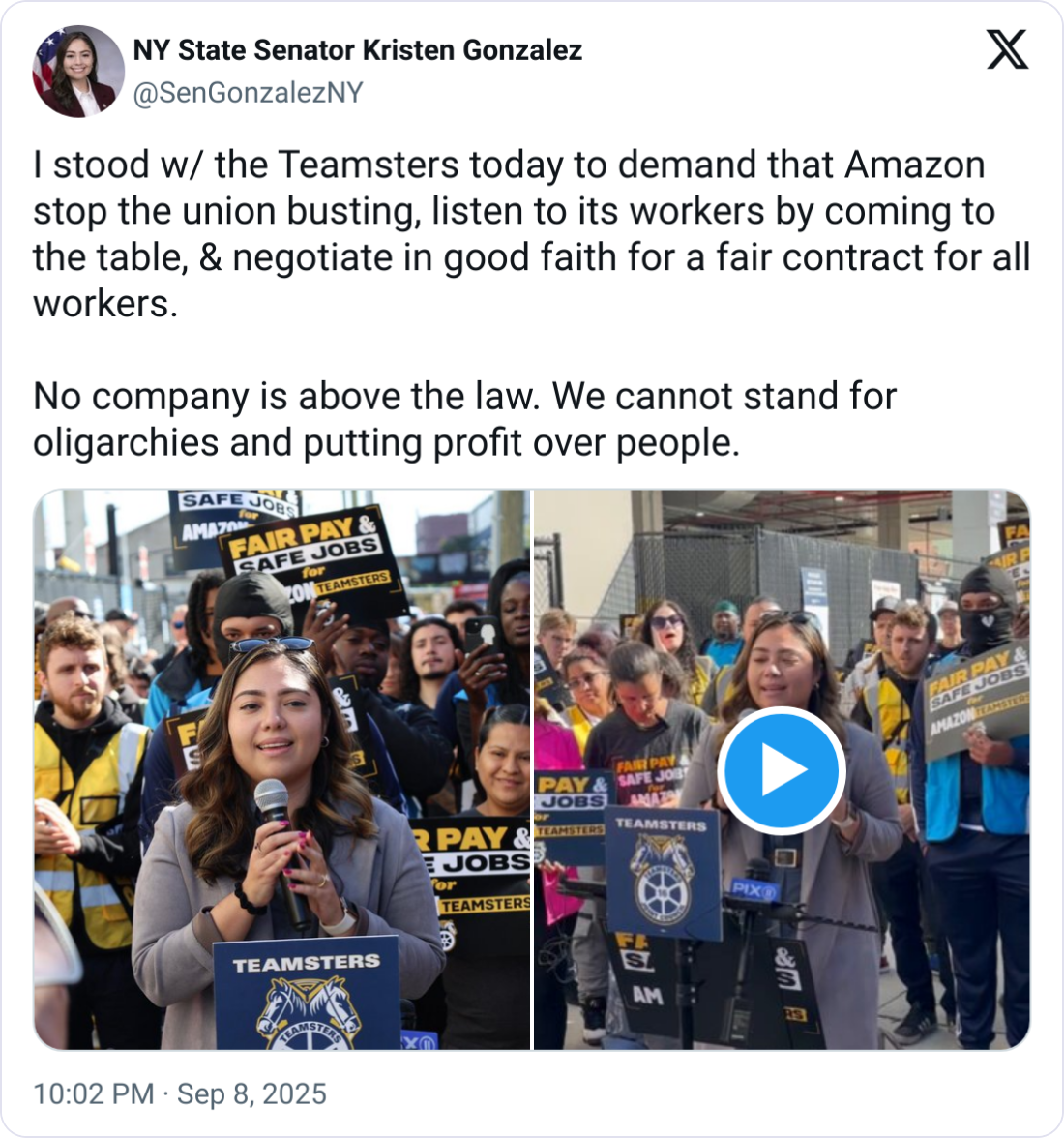
Amazon Faces Mounting Union Pressure as NLRB Case and Teamsters Wins Converge
Amazon faces NLRB claims of “overwhelming control” over contract drivers while Teamsters secure new wins at Whole Foods distributor UNFI, signaling union momentum and potential labor cost pressures across Amazon’s logistics ecosystem.
Amazon is confronting fresh labor challenges on two fronts: a National Labor Relations Board (NLRB) case in California that could redefine its relationship with contract drivers, and a string of Teamsters victories across its Whole Foods supply chain. Together, the developments signal union momentum inside Amazon’s broader logistics ecosystem, with potential ripple effects for labor classification and operating costs.
NLRB Hearing on Contract Drivers
In Los Angeles, labor board prosecutors argued that Amazon exerted “overwhelming control” over subcontracted drivers in Palmdale, California, despite maintaining they were not employees.
“Amazon structured its logistics network to maintain all the benefits of control while denying any responsibility as an employer,” said Sanam Yasseri, an attorney for the NLRB’s general counsel. She told the judge that Amazon “controls every minute of the drivers’ day.”
Yasseri detailed conditions imposed on delivery service partners (DSPs), noting that Amazon required drivers to be trained under its policies, dictated wages and schedules, and monitored workers in real time. “The drivers worked under the constant monitoring and daily critique of Amazon,” she said.
Amazon rejected those claims. Company attorney Brian Stolzenbach told the judge the complaint should be dismissed, calling subpoena requests into its joint employer status a “fishing expedition.” “Amazon is not going to participate in the misuse of the NLRB’s processes,” he said.
Amazon spokesperson Eileen Hards added in an email that the company looks forward to demonstrating the allegations have “no merit.”
Teamsters Expand Through UNFI, a Key Amazon Supplier
At the same time, the Teamsters are building momentum at United Natural Foods Inc. (UNFI), a major distributor to Amazon-owned Whole Foods. In Richburg, South Carolina, workers voted 27–15 to join the Teamsters, a move the union quickly tied to Amazon.
“The victory is the latest in a wave of Teamsters organizing wins at the nation’s largest distributor for Amazon-owned Whole Foods,” the union said in a prepared statement.
Across UNFI, the Teamsters report more than 3,000 new members in recent years, bringing the total above 5,000. In 2025 alone, NLRB records confirm union wins in Richburg and Pompano Beach, Florida, while earlier this year over 1,000 UNFI workers in three states ratified a contract providing “significant wage increases, improved benefits, and a defined benefit pension plan.”
UNFI has acknowledged ongoing organizing efforts, telling FreightWaves: “Where our associates are represented, UNFI maintains constructive relationships with those unions, and we bargain in good faith to reach agreements that are fair to both sides.”
What It Signals
These parallel developments point to three critical signals for Amazon and the broader logistics sector:
Union momentum inside Amazon’s ecosystem: Even if direct Amazon warehouse campaigns have faltered, Teamsters gains at Whole Foods’ distributor show unions can still expand influence through supply chain partners.
Legal precedents on labor classification: If the NLRB judge finds Amazon a “joint employer” of contract drivers, the decision could reshape how gig-style logistics models are treated under federal labor law.
Labor cost inflation: From potential bargaining obligations with DSP drivers to higher wages at UNFI, the cost base across Amazon’s logistics operations could rise if union pressure continues.
Hello! I'm Jerome FreightCaviar! I’m into the politics of freight and the impact it will have worldwide. I'm always eager to learn more. Follow me on X @JeromeFreightC
Plus, New York takes the CDL fight to federal court, a new wave of carrier and broker bankruptcies, cargo thieves are infiltrating vetted fleets from the inside — and more in today's newsletter.
Plus, USPS gives non-domiciled CDL carriers an 11-day deadline, the spot-to-contract spread starts squeezing 3PLs, Knight-Swift trims its Q1 guide but stays bullish, and more.
Plus, diesel's rising price streak finally snaps, a 13-year shipper relationship ends in a $726K lawsuit, Congress takes a real swing at cargo theft, and more in today's newsletter.
Keep up with the freight broker world in 5 minutes.
Join over 14K+ subscribers to get the latest freight news and entertainment directly in your inbox for free. Subscribe & be sure to check your inbox to confirm (and your spam folder just in case).